Beginner Home Workout: The Complete Guide
ByProbiotic Diet Editorial
Updated onOctober 1, 2026
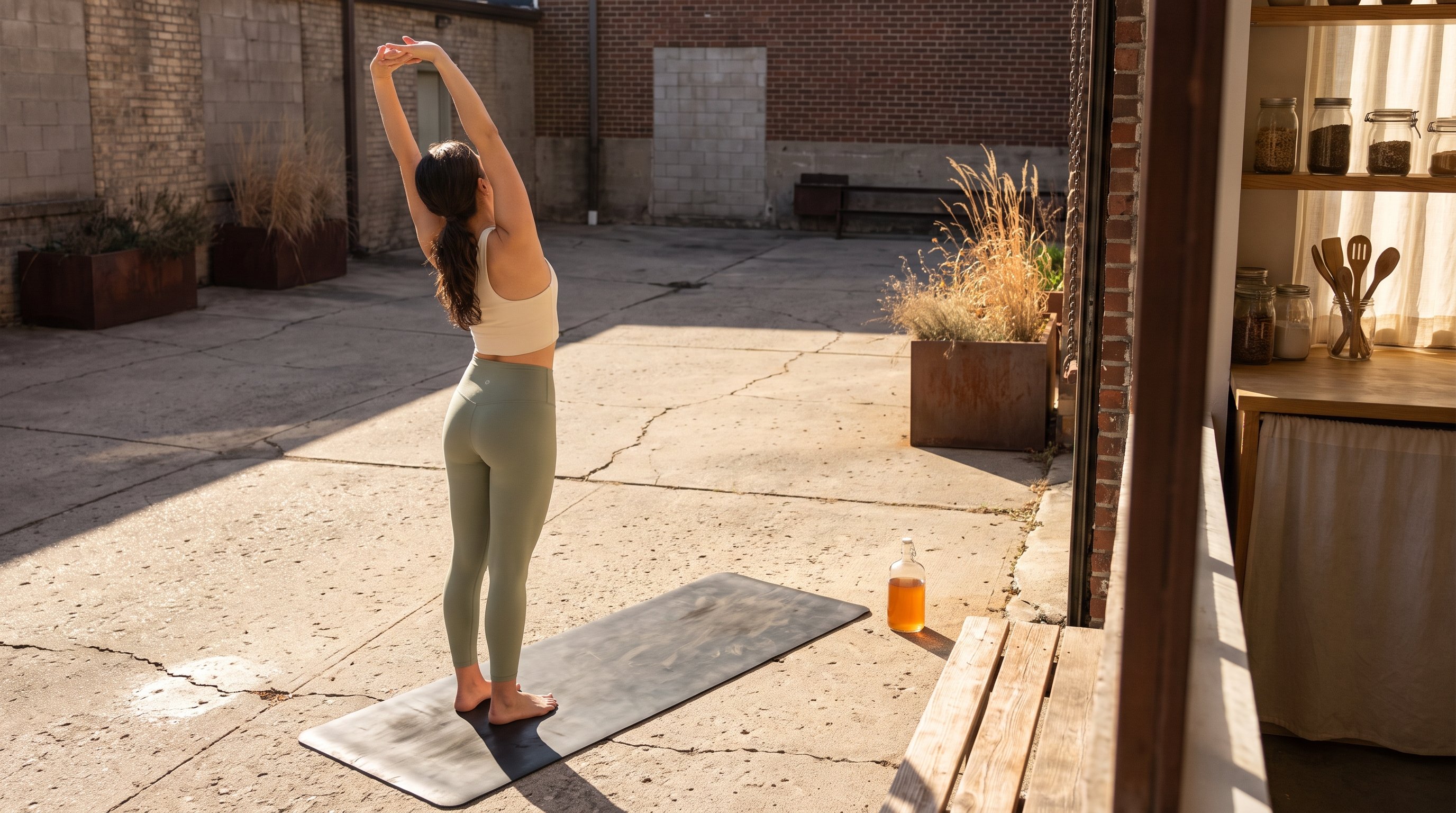
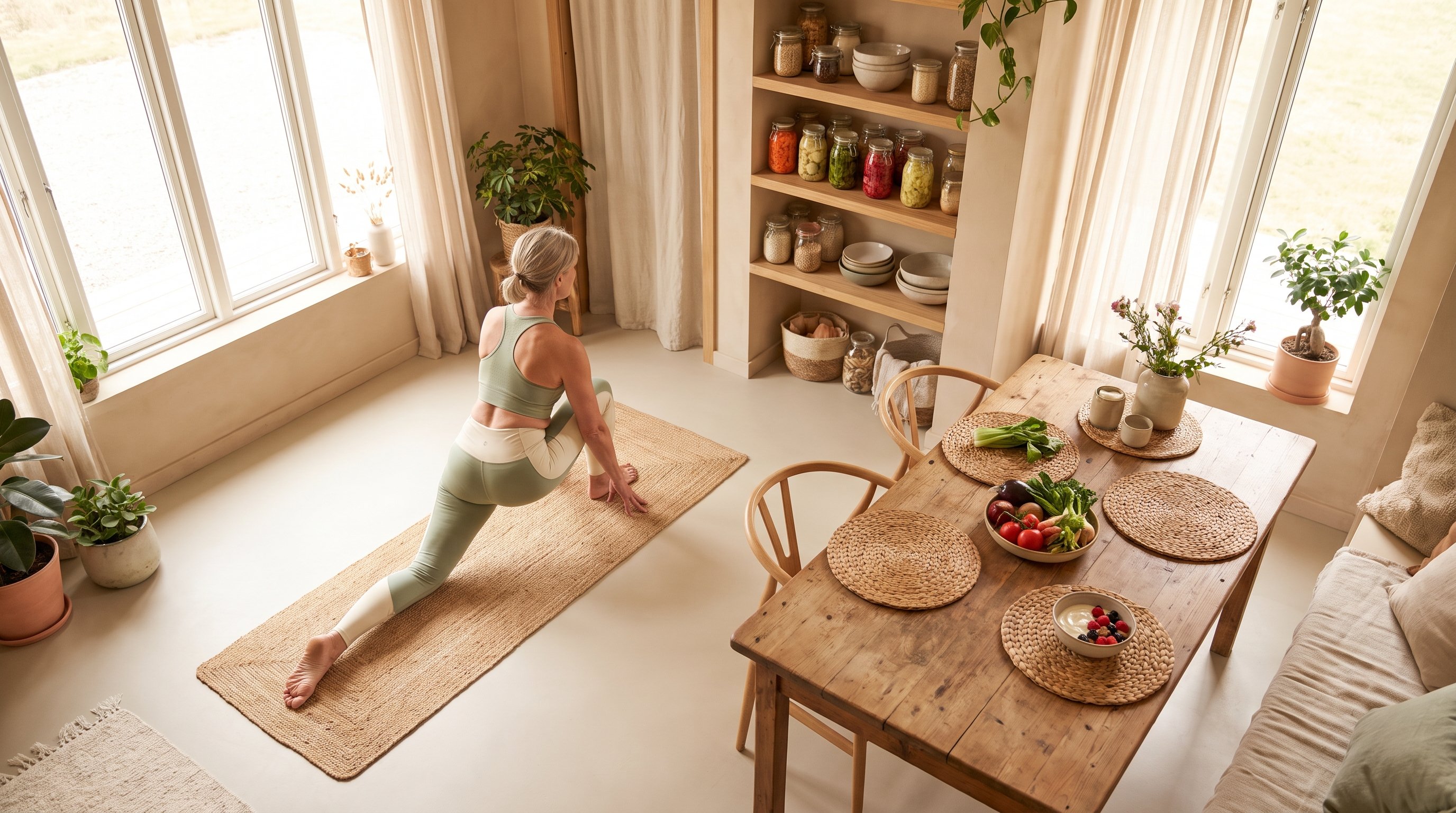
A beginner home workout needs about 20 minutes, three times a week, to count as a real habit - no equipment required.
The mechanism is simple: muscles respond to being asked to work a bit harder than usual, and that response does not care whether you're in a gym or a living room.
This guide covers whether home workouts actually work, how much you need, what a first month looks like, and what tends to stall progress before it starts.
Does a Beginner Home Workout Actually Work?
A workout works when it creates a demand on your muscles, heart and lungs that's bigger than what everyday life asks of them.
A bodyweight squat, a set of push-ups against a wall, or a brisk set of step-ups on your stairs all do this - the body doesn't check your postcode.
Here's the arithmetic: three 20-minute sessions a week is 60 minutes total.
Over four weeks that's 240 minutes of movement that wouldn't have happened otherwise, and that total is what drives change, not the location it happened in.
Why This Beats the Harder Alternative
The harder alternative is a gym membership, a commute, a changing room and a schedule built around someone else's opening hours.
Every one of those steps is a chance to talk yourself out of it, and a plan only works on the days you actually do it.

A home workout removes the travel step entirely, which means the only decision left is whether to start, not whether to leave the house first.
Fewer decisions mean fewer chances to quit, and that's the whole adherence argument in one sentence.
The Quantity Question: How Much, How Often?
Most beginners do well starting with three sessions a week, leaving a rest day between each one.
That's enough demand to matter and enough recovery to avoid burning out in week two.
Find Your Own Number
Start with whatever you can repeat for four weeks without dreading it - two sessions beats zero, and five sessions beats none if you quit by week three.
| Week Type | Sessions | Length |
|---|---|---|
Very Busy Week | 2 sessions | 15 minutes |
Typical Week | 3 sessions | 20 minutes |
Motivated Week | 4 sessions | 25 minutes |
Rest Priority | 1 session | 10 minutes |
Pick a row that matches the week you're actually having, not the week you wish you had.
The Practical Question: What Do You Actually Do?
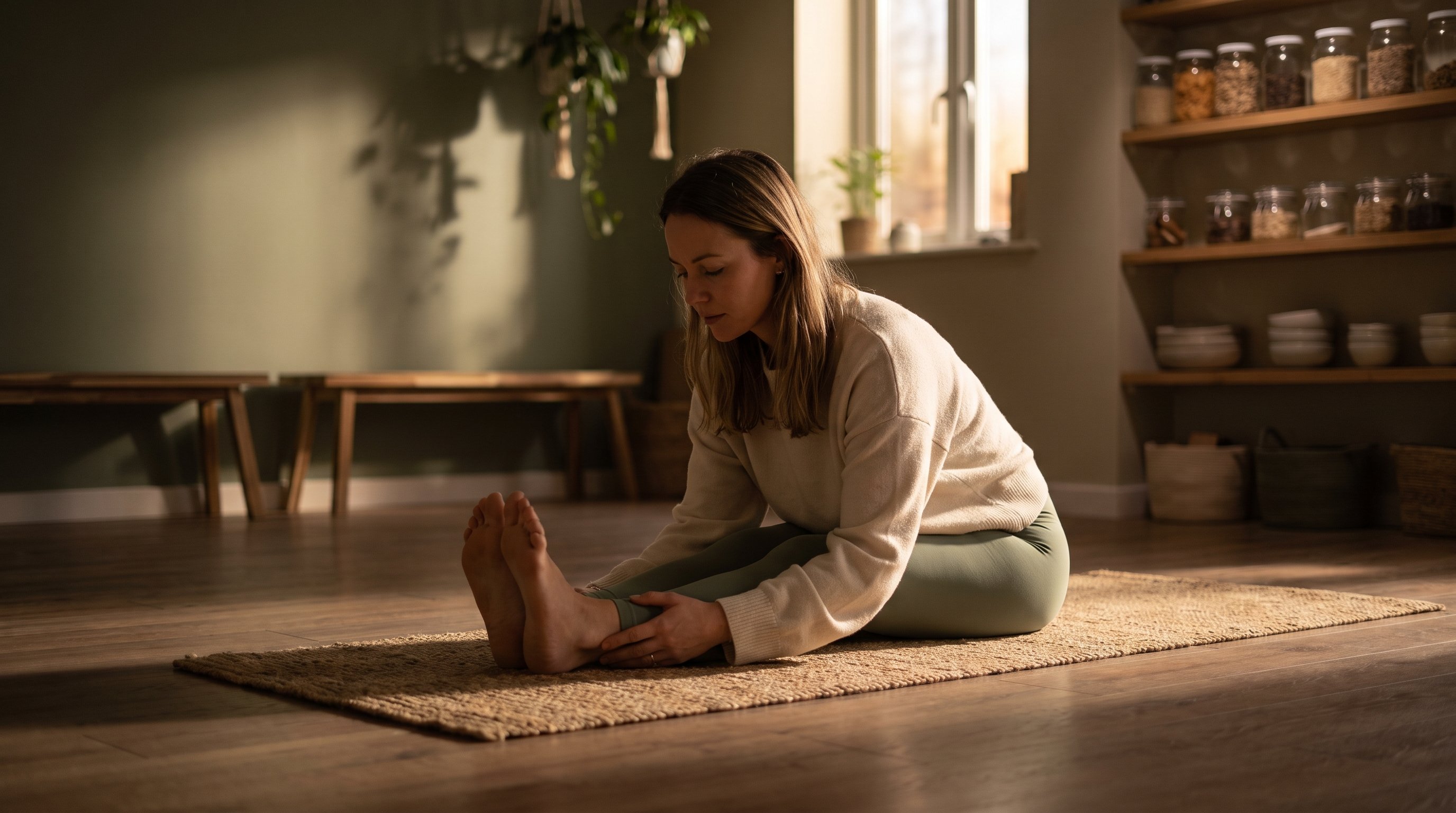
In practice, a beginner home workout is a short sequence: a few minutes warming up, a handful of bodyweight moves, a few minutes of stretching.
No kit, no subscription, no specific outfit required - just floor space and a bit of time.
If choosing the moves yourself feels like the hard part, Probiotic Diet includes 100+ workouts and exercises, from simple bodyweight routines to yoga and meditation guides, so you're following a plan instead of guessing.
Having the sequence already laid out removes one more decision from a day that probably already has enough of them.
The Comparison: Home Workout or Gym Membership?
This is the decision most beginners are actually weighing, and it's less about which is 'better' and more about which one you'll keep doing.
| Factor | Home Workout | Gym Membership |
|---|---|---|
Setup Time | Under a minute | Travel plus changing |
Equipment Needed | None required | Machines and weights |
Weather Dependent | Never | Only for the commute |
Privacy | Fully private | Shared space |
Cost | No membership fee | Monthly membership |
Neither option is wrong, but the one with fewer barriers is the one more likely to still be happening in month three.
The Forbidden Promise, Answered Honestly
No workout, home or otherwise, can target fat loss in one specific area - the body doesn't work that way, and nothing in this guide pretends it does.
Squats strengthen the muscles under wherever fat sits, but they don't choose which fat leaves first.
There's also no overnight version of this - consistent movement over weeks is what changes how your body feels and functions, not one tough session.
The honest answer is slower than the promise, but it's the one that actually holds up.
Levers That Change the Result
Three things move the needle more than any specific exercise choice.
What Actually Matters
- Consistency over time - three sessions a week for a month beats five sessions one week and none the next.
- Gradual increase in effort - adding a few more reps or a slightly longer session every couple of weeks keeps the demand ahead of what your body has adapted to.
- Recovery between sessions - rest days are when the adaptation actually happens, not wasted time.
How Long Until You See Results?
This is where most people quit - somewhere between week two and week four, when the new feels gone and the results feel invisible.
Strength and ease of movement tend to show up before anything visible does, so the first signal is usually that the same routine feels less hard.
Stay vague about a date and focus on the session count instead - showing up for the next one is the only thing you can control today.
Your First Four Weeks
The order of these weeks matters more than the exact numbers in them.
| Week | Focus | Sessions |
|---|---|---|
Week 1 | Learn the moves | 2-3 short sessions |
Week 2 | Build the habit | 3 sessions, same length |
Week 3 | Add a little effort | 3 sessions, slightly longer |
Week 4 | Check in and adjust | 3-4 sessions |
By week four, the goal isn't a dramatic change - it's that the routine feels familiar instead of new.
What Stalls Progress
Starting Too Hard
Jumping straight into long, intense sessions in week one often leads to soreness bad enough to skip week two entirely - start smaller than feels impressive.
No Fixed Time Slot
'Whenever I get a chance' rarely survives a busy week - pick the same slot each session day so it stops needing a decision.
Judging Too Early
Checking for change after a handful of sessions sets up disappointment before the habit has even formed - give it weeks, not days.
All Workout, No Other Habits
Movement alone is only one piece - what you eat and how consistently you track it both shape how the effort pays off.
Losing the Thread After a Missed Day
One missed session is not a failed plan - the fix is simply the next session, not starting over from scratch.
Why Probiotic Diet Works for This
A beginner home workout is easier to stick with when it's not the only thing you're trying to figure out alone.
Probiotic Diet pairs its 100+ workouts and exercises with a tailored meal plan built from over 1000 recipes, progress trackers for steps, water and weight, and motivating challenges that keep sessions from quietly fading out.
Final Thoughts
A beginner home workout doesn't need to be impressive to work - it needs to happen, repeatedly, for weeks.
Pick a number of sessions you can actually keep, track it somewhere, and let Probiotic Diet handle the planning side while you focus on showing up.
Frequently Asked Questions
Do I Need Any Equipment to Start?
No - bodyweight moves like squats, push-ups and step-ups use your own weight as the resistance. A towel or mat for comfort is the only extra most people want.
Isn't a Home Workout Less Effective Than a Gym?
Effectiveness comes from the demand placed on your muscles and lungs, not the building you're standing in. A consistent home routine will outperform an occasional gym visit every time.
What If I Don't Have Much Space?
Most beginner moves fit in the space of a yoga mat, so a small room or even a hallway is enough. Space is rarely the real barrier - time and routine usually are.
What If I Fall Off the Routine After a Few Weeks?
That's the most common drop-off point, and it usually means the plan got too hard too fast rather than that you failed. Probiotic Diet's challenges and tracking are built to help you pick the thread back up instead of starting over.