Gentle Exercise: Why Less Effort Works and a 4-Week Plan
ByProbiotic Diet Editorial
Updated onOctober 1, 2026
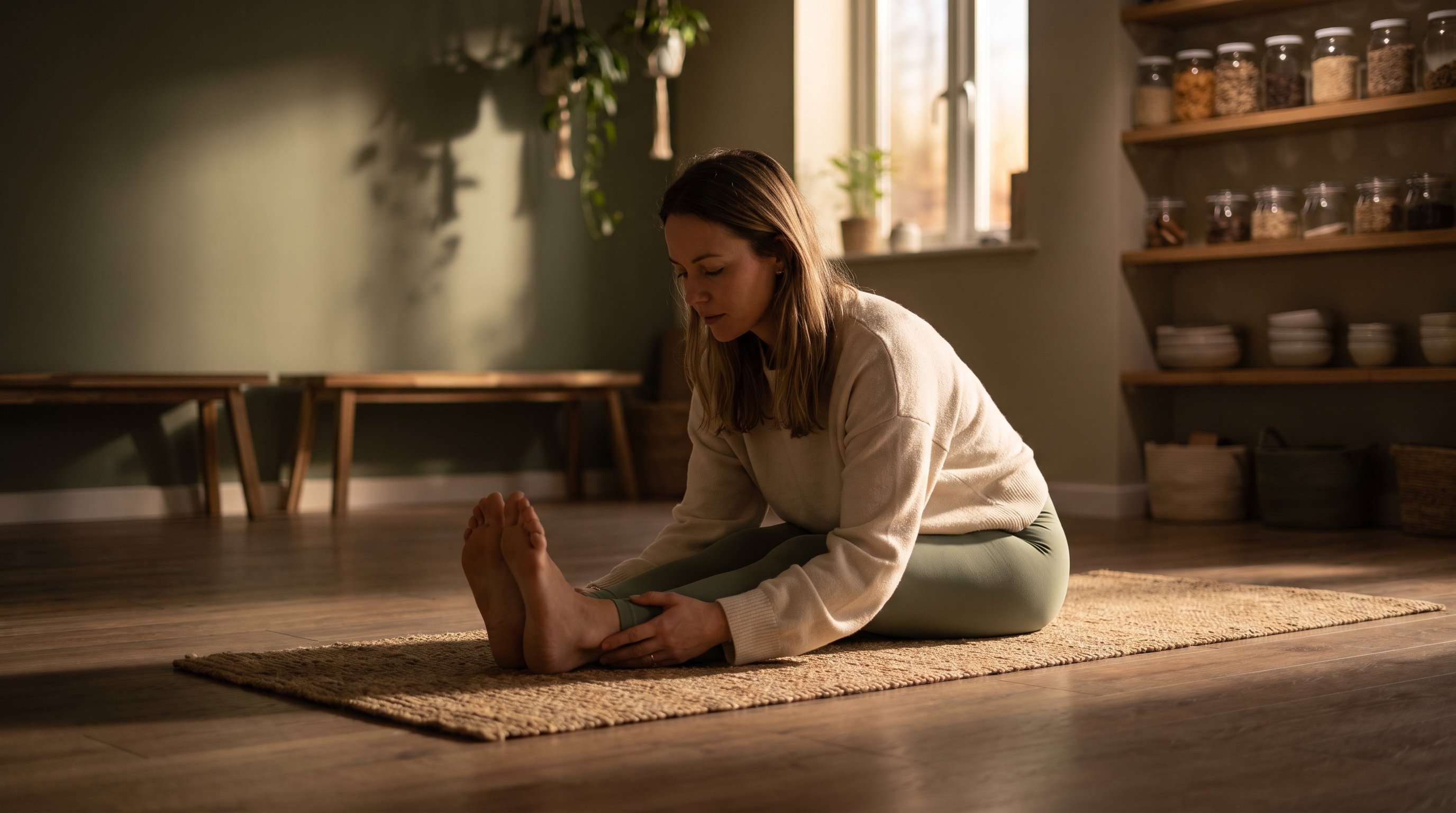
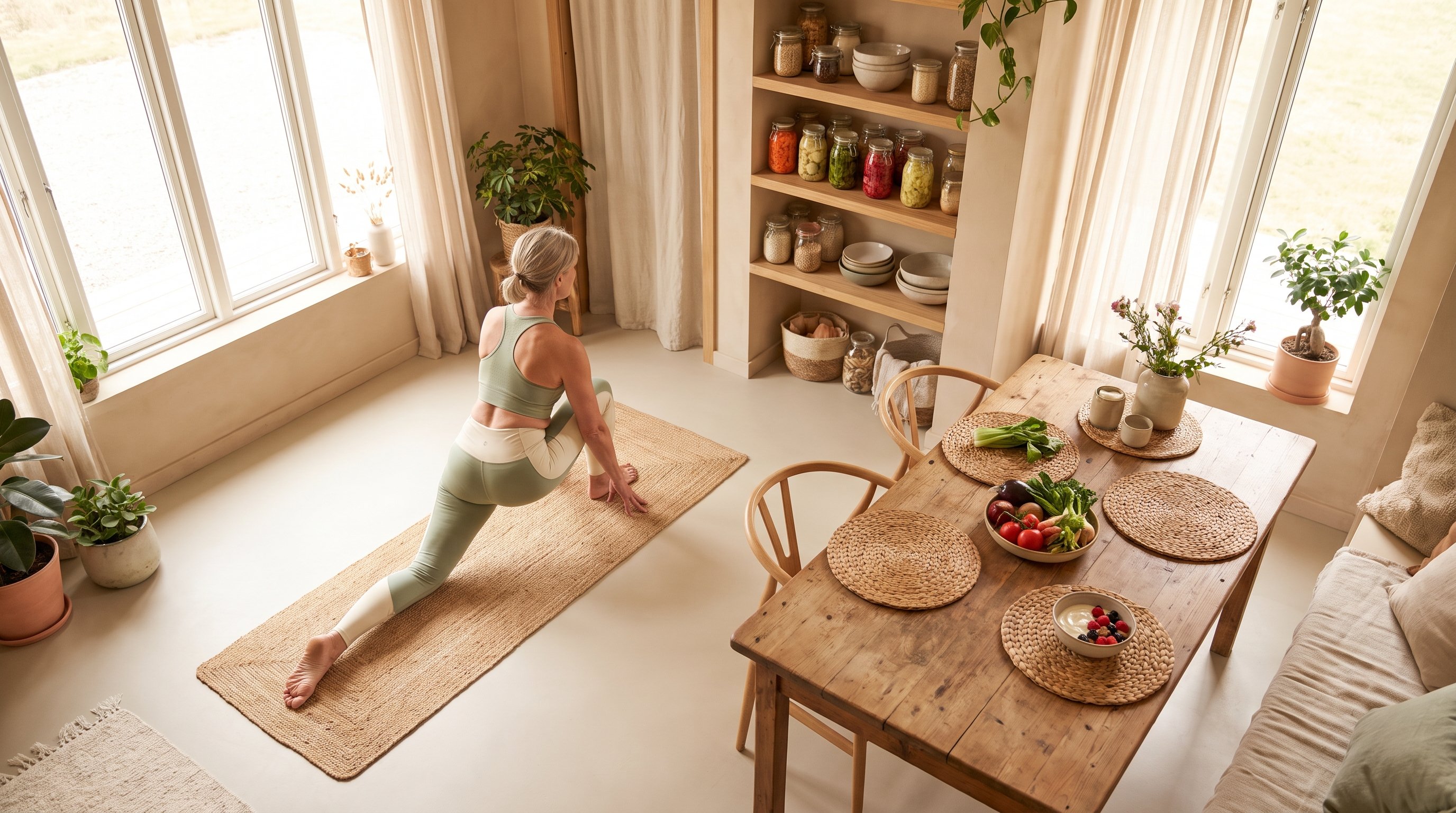
Ten to twenty minutes of gentle exercise a day - walking, stretching, light yoga - is enough to start changing how your body feels within a week or two of regular practice.
The mechanism is simple: movement improves circulation, loosens joints, and nudges your nervous system out of constant tension, without the recovery cost of intense training.
This guide covers whether light movement actually works, how much you need, what stalls progress, and a four-week plan you can start today.
Does Gentle Exercise Work?
Light movement works through repetition, not intensity. A walk, a stretch sequence, a slow bike ride - still asks your muscles to contract, your heart to pump a bit faster, and your joints to move through their range.
Do that daily and the effect compounds. Twenty minutes of movement a day adds up to roughly two and a half hours a week, which is more total movement than a single hard session most people skip because it's exhausting to think about.
The honest arithmetic: consistency multiplied by small effort usually beats intensity multiplied by frequent skipped days. A manageable routine done five or six days a week outperforms, on paper, a punishing one done once.
Why This Beats the Harder Alternative
Harder workouts fail for a boring reason: people stop doing them. Soreness, time pressure, and dread all chip away at adherence long before fitness becomes the limiting factor.
Light movement removes most of those barriers. It doesn't need a shower after, it doesn't wreck your schedule, and it doesn't leave you too stiff to want to repeat it tomorrow.

That's the real advantage: a routine you'll actually repeat beats a routine that looks better on paper but gets abandoned after a fortnight. Adherence is the hidden variable that decides almost everything else.
The Quantity Question
There's no single correct dose of low-impact movement. What matters is finding an amount you can repeat most days without it feeling like a chore.
Find Your Own Number
Start with a duration that feels almost too easy, then let your own week-to-week comfort tell you when to add a little more.
The table below gives a few starting points depending on your current activity level.
| Starting Point | Suggested Duration | Focus |
|---|---|---|
Mostly sedentary | 10 minutes daily | Walking or stretching |
Occasionally active | 15-20 minutes daily | Walking plus light yoga |
Regularly active | 20-30 minutes daily | Mixed light movement |
Returning after a break | 10-15 minutes daily | Stretching and short walks |
The Practical Question
Knowing you should move daily is one thing. Remembering to, and tracking whether it's actually happening, is another problem entirely.
This is where a bit of structure helps more than willpower does. Probiotic Diet includes light workouts and step tracking in one place, so movement sits next to the rest of your daily habits instead of being one more thing to remember on its own.
Keeping steps, water intake and workouts logged together makes the pattern visible, which makes it easier to keep going.
Comparison: Light Movement Versus Intense Training
Most people aren't choosing between low-impact routines and nothing. They're choosing between light movement and a harder routine that sounds more impressive.
Here's how the two options actually compare on the factors that decide whether you stick with either one.
| Factor | Light Movement | Intense Training |
|---|---|---|
Recovery time needed | Minimal | Often a full day |
Equipment required | None or minimal | Often gym access |
Daily repeatability | High | Low to moderate |
Risk of overuse strain | Low | Higher |
Mental barrier to starting | Low | Often high |
The Forbidden Promise, Answered Honestly
No form of exercise, light or otherwise, burns fat from one specific area of the body. That's not how the body works, no matter what a routine claims to target.
There's also no version of low-impact movement that delivers results overnight. The body changes on its own timeline, shaped by consistent habits rather than any single session.
The real answer is less exciting and more useful: regular, repeatable movement supported by decent daily habits is what actually moves the needle over time.
Levers That Change the Result
Not every habit carries equal weight. These three make the biggest difference to how light movement pays off.
What Actually Moves the Needle
- Consistency over intensity - showing up most days matters more than how hard any single session feels.
- Sleep and stress levels - a body under constant stress recovers slower, even from light movement.
- What you eat around it - low-impact exercise paired with a sensible eating pattern supports the effort instead of working against it.
How Long Until You See Results?
This is where most people give up - right before anything becomes visible. The early weeks of regular movement tend to change how you feel before they change how you look.
Energy, sleep quality and mood are usually the first things to shift. Anything more visible takes longer and depends on far more than the exercise alone, so it's worth judging progress by how consistent you've been rather than by the mirror.
Your First Four Weeks
The order of these weeks matters more than the exact minutes. Build the habit first, then let the duration grow.

| Week | Focus | Target |
|---|---|---|
Week 1 | Build the habit | 10 minutes daily |
Week 2 | Add variety | Walking plus stretching |
Week 3 | Extend slightly | 15-20 minutes daily |
Week 4 | Review and adjust | Settle on a routine |
What Stalls Progress
Treating Rest Days As Failure
Light movement doesn't need daily perfection. Missing a day and restarting the next is still consistency, not a setback.
Doing Too Much Too Soon
Jumping straight to 30 minutes when 10 felt hard usually ends in quitting. Scale up slowly so the habit survives the first month.
No Way to See the Pattern
Without tracking, it's easy to lose sight of how often you're actually moving. A simple log turns a vague sense of effort into something you can trust.
Ignoring the Rest of the Day
Twenty minutes of movement can't outpace a day of poor sleep and rushed meals. The exercise works best as one piece of a wider routine, not a fix on its own.
Why Probiotic Diet Works for This
Light movement sticks best when it's not the only thing you're trying to manage on your own. Probiotic Diet brings workouts, step and water tracking, and a meal plan built around food you already like into one place, so the habit doesn't depend on memory alone.
Motivating challenges and progress tracking help keep the routine visible day to day, which makes it easier to stay consistent without overhauling your whole schedule.
Final Thoughts
Gentle exercise isn't the dramatic option, and that's exactly why it works - it's the one you'll actually keep doing. Small, repeatable movement, done most days, adds up in ways a single hard session never quite does.
Start with ten minutes today, and if tracking that feels like one task too many, Probiotic Diet can hold the steps, water and workouts in one place so you only have to remember to move.
Frequently Asked Questions
Can Light Movement Actually Help With Weight Management?
It can support a wider routine by adding daily activity without the recovery cost of harder training. On its own it works best alongside sensible eating habits rather than as a standalone fix.
Isn't Light Movement Too Easy to Make a Difference?
Easy is the point, not a flaw - it's what makes it repeatable most days of the week. Repeated often, low-impact activity adds up to more total movement than an intense session people keep skipping.
What If There's No Time for Even Ten Minutes?
Ten minutes can be split into two five-minute stretches around the day rather than done all at once. The goal is building the habit, not finding a perfect uninterrupted block of time.
Why Do People Usually Stop After a Couple of Weeks?
Motivation fades once the novelty wears off and nothing dramatic has changed yet, which is exactly when consistency matters most. Apps like Probiotic Diet help by keeping the routine visible through tracking, so the habit doesn't rely on memory or motivation alone.