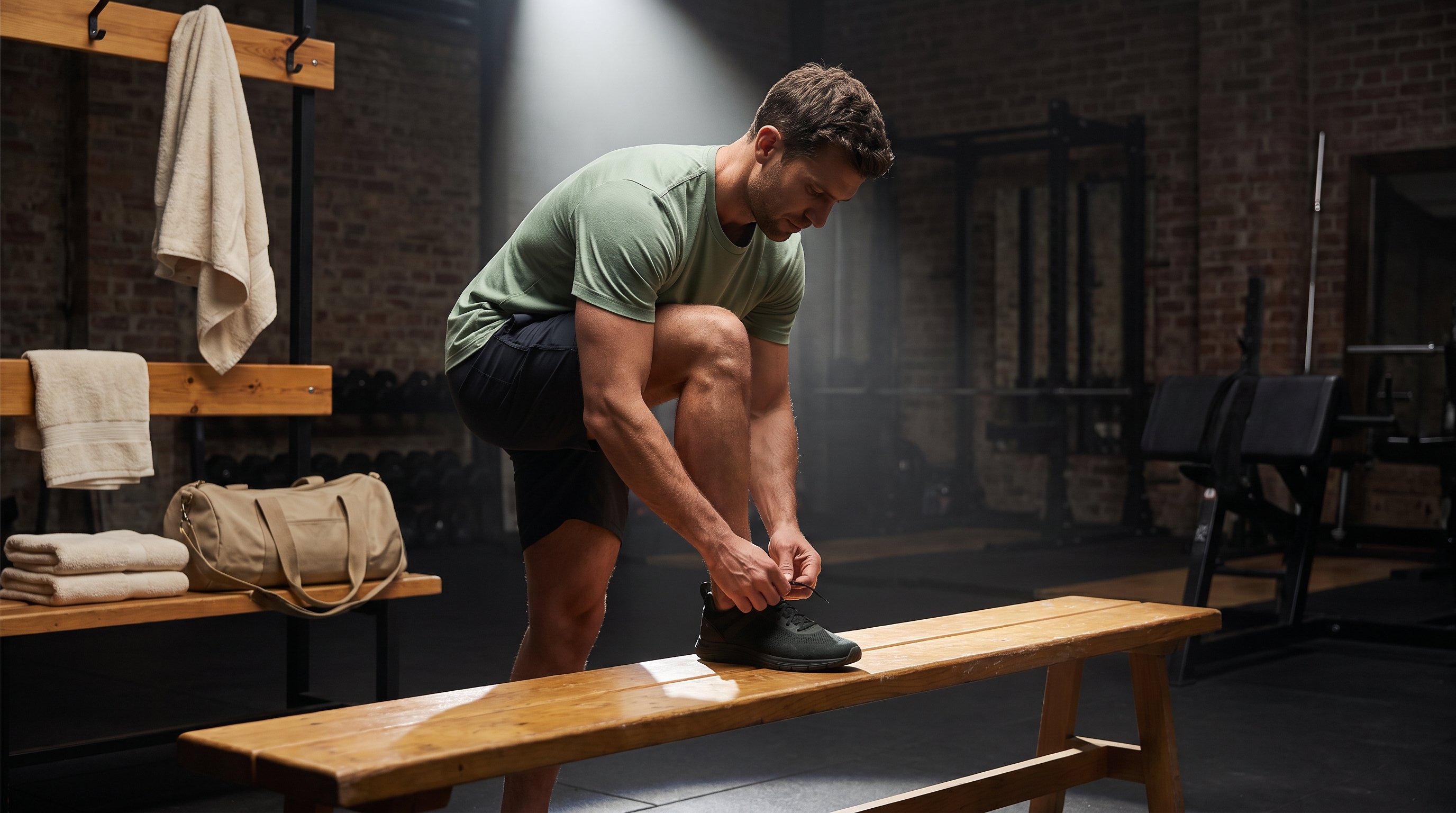
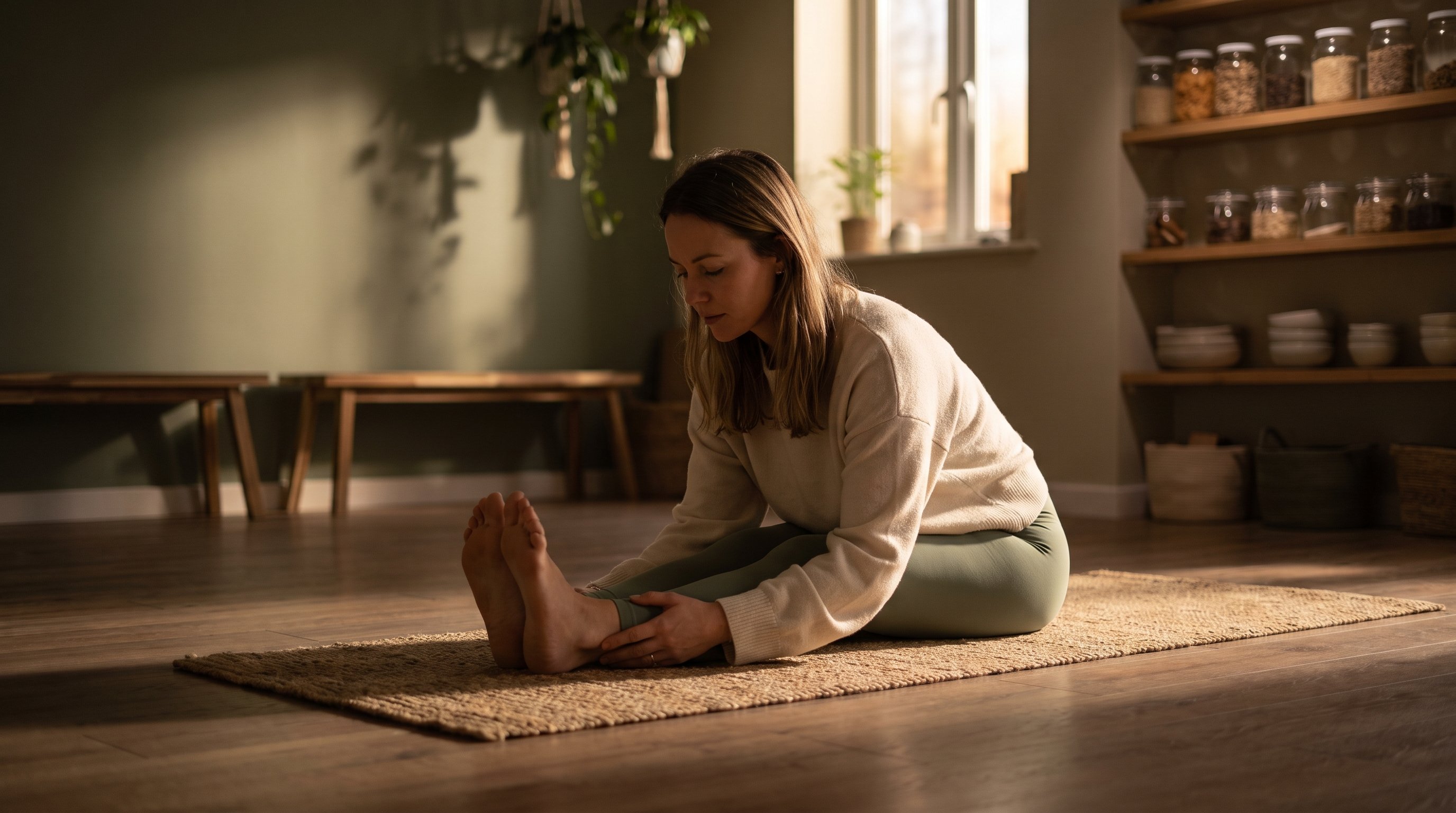
Leg Workout at Home: No-Equipment Routine for Real Progress
ByProbiotic Diet Editorial
Updated onOctober 1, 2026

A leg workout at home can cover the same muscle groups as a gym session using nothing but bodyweight, a chair, and about 20 minutes.
Muscles respond to tension and repetition, not to the brand of equipment creating it. Squats, lunges and step-ups load the same muscle fibres a leg press does; the body does not know the difference.
This guide covers whether home leg training actually works, how much to do, a simple four-week start, and the habits that make it stick.
Does a Leg Workout at Home Actually Work?
Strength training works through progressive tension - a muscle fibre under enough load adapts by getting stronger, whether that load comes from a barbell or your own bodyweight.
A bodyweight squat moves roughly the same percentage of your body weight through the same range of motion as a light goblet squat.
Do the arithmetic: 3 sets of 15 squats is 45 repetitions of your own bodyweight moving through a full range of motion.
That is a real training stimulus, not a placeholder until you get to a gym. The limiting factor at home is usually how far you push the difficulty, not the lack of machines.
Why This Beats the Harder Alternative
The gym version of this plan might build strength slightly faster on paper. It also requires a commute, a membership, and a window of time that matches opening hours.
A home leg workout removes every one of those steps. Fewer steps between you and the first rep means more days where the workout actually happens.
Consistency is unglamorous and it wins anyway. Four home sessions a week beats one perfect gym session that keeps getting cancelled.
This is the adherence argument, not a performance one - the workout you'll actually repeat outperforms the one you keep postponing.
The Quantity Question: How Many Reps, Sets, and Days
Most bodyweight leg routines sit comfortably between 2 and 4 sets of 10 to 20 reps per exercise, done 2 to 4 days a week.
That range exists because legs recover faster than people expect and respond well to frequent, moderate doses rather than occasional, brutal ones.
Find Your Own Number
Start at the low end of the range and only add reps or sets once the current amount feels manageable, not exhausting.
The table below is a starting point to adjust, not a fixed prescription.
| Starting Point | Sets | Reps | Frequency |
|---|---|---|---|
New to training | 2 sets | 10-12 reps | 2 days a week |
Some experience | 3 sets | 12-15 reps | 3 days a week |
Regular mover | 3-4 sets | 15-20 reps | 3-4 days a week |
The Practical Question: Fitting It Into a Real Day
The honest barrier isn't knowing which exercises to do - it's remembering to do them on a Tuesday when the day has already gone sideways.
A short routine only works if something keeps nudging you back to it, which is where a bit of structure helps more than willpower does.
Probiotic Diet includes over 100 simple workouts and exercises built for exactly this kind of short home session, alongside step, water and weight trackers that keep the rest of the day visible in one place.
That combination makes it easier to see a leg session as one piece of a wider daily routine rather than a separate chore to schedule around.
Comparison: Home Leg Workout vs Gym Leg Day
The real decision isn't which is objectively superior - it's which one you'll repeat often enough to matter.
| Factor | At Home | At The Gym |
|---|---|---|
Equipment needed | None or minimal | Machines and weights |
Time per session | 15-25 minutes | 45-60 minutes with travel |
Cost | Free | Membership fee |
Flexibility | Any time, any room | Fixed opening hours |
Progression ceiling | High with variations | Higher with added load |
The Forbidden Promise, Answered Honestly
No leg workout, at home or anywhere else, reshapes one body part on demand. The body decides where it changes shape, not the exercise you pick.
Squats and lunges strengthen the muscles underneath, which is genuinely useful, but they do not selectively remove anything from the area you're working.
There's also no overnight version of this. The real answer is slower and less exciting: repeated sessions, modest increases, and time doing the quiet work of adaptation.
Levers That Change the Result
Three things move the needle more than anything else in a home leg routine, and they matter in this order.
What Actually Moves the Needle
- Consistency over intensity - three moderate sessions a week beats one all-out session you dread repeating.
- Gradual overload - adding a few reps or a slower tempo every couple of weeks keeps the muscle adapting instead of plateauing.
- Recovery between sessions - legs need a day off to rebuild, so back-to-back maximum effort days usually backfire.
How Long Until You See Results?
Most people quit in the first couple of weeks, right when the routine feels hardest and least rewarding - that's the point to expect, not avoid.
Strength and ease in the movements tend to show up before any visible change does, and that order is normal, not a sign something isn't working.
Timeframes vary a lot from person to person, so it's more useful to track how a squat feels week to week than to watch a calendar.
Your First Four Weeks
Order matters here more than exact numbers - build the habit first, then build the difficulty.
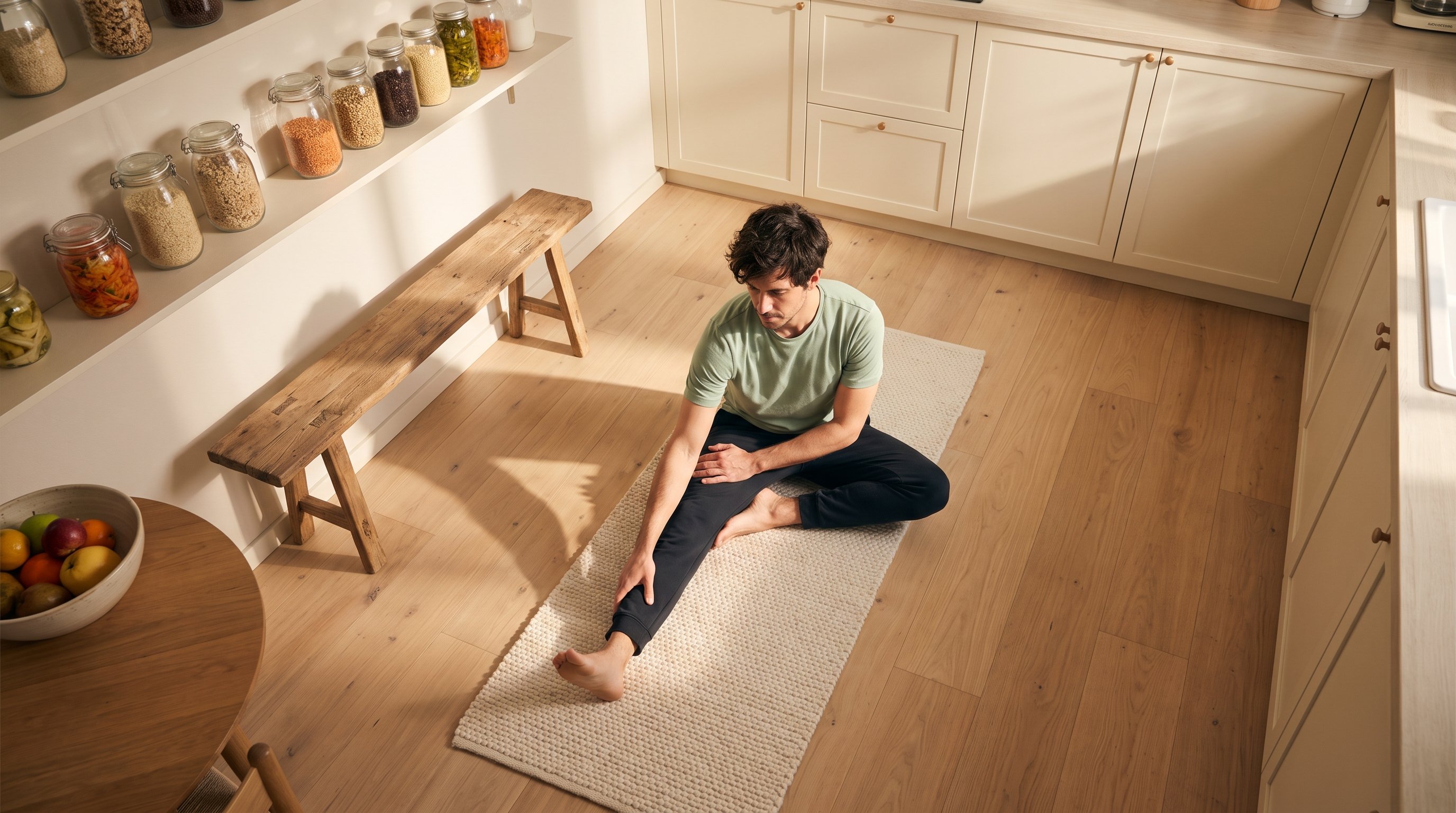
| Week | Focus | Target |
|---|---|---|
Week 1 | Learn the movements | 2 sessions, light effort |
Week 2 | Build the habit | 3 sessions, same reps |
Week 3 | Add a little load | 3 sessions, more reps |
Week 4 | Hold the routine | 3-4 sessions, steady |
What Stalls Progress
Starting Too Hard, Too Fast
Jumping straight into maximum reps leaves you too sore to train the next session - ease in for the first week instead.
Skipping the Warm-Up
Cold muscles make the same movements feel harder than they are - a couple of minutes of easy marching or stretching fixes this.
Never Changing the Routine
Doing the exact same reps for months stops challenging the muscle - add a few reps, slow the tempo, or try a single-leg variation.
Treating Rest Days As Failure
Legs rebuild on the days off, not during the workout itself - skipping recovery usually causes a plateau, not faster progress.
No Way to Track What Happened Last Week
Without a record, it's easy to repeat the same session indefinitely without noticing - a simple tracker solves this in minutes.
Why Probiotic Diet Works for This
A leg workout at home only works long term if it sits inside a routine you can actually keep, not a separate task competing for willpower.
Probiotic Diet brings workouts, progress tracking, and daily habits into one place, so a short leg session fits next to meal plans, water tracking, and motivating challenges instead of standing alone.
That structure is what turns three sessions this week into three sessions next month too.
Final Thoughts
A leg workout at home asks for very little - some floor space, a few minutes, and a willingness to repeat it on the boring days as well as the good ones.
Start with the lighter end of the numbers above, track how it feels each week, and let Probiotic Diet hold the rest of the routine together while the legs do their part.
Frequently Asked Questions
Can a Home Leg Workout Actually Build Strength Without Weights?
Yes - bodyweight squats, lunges and step-ups move your own body weight through a full range of motion, which is a genuine training load. Progress comes from adding reps, slowing the tempo, or trying single-leg versions as the current level gets easier.
Isn't a Home Workout Just a Weaker Version of the Gym?
It covers the same muscle groups through the same movement patterns, so it isn't weaker - it's a different delivery method for the same stimulus. The gym may offer more room to add heavy load later, but that's a future consideration, not a reason to skip starting now.
What If There's No Space or Equipment at All?
A leg workout at home needs roughly a square metre of floor and nothing else for most of the core exercises. A sturdy chair or low step covers the rest for step-ups and added balance work.
What Usually Causes People to Stop After a Couple of Weeks?
Starting too intensely, skipping warm-ups, and having no way to track what happened last session are the most common reasons people drop off. Probiotic Diet's tracking and short workout library are built to remove exactly that friction, so the routine stays visible instead of forgotten.