Fermented Foods List: A Practical Guide To Eating More Of Them
ByProbiotic Diet Editorial
Updated onOctober 1, 2026

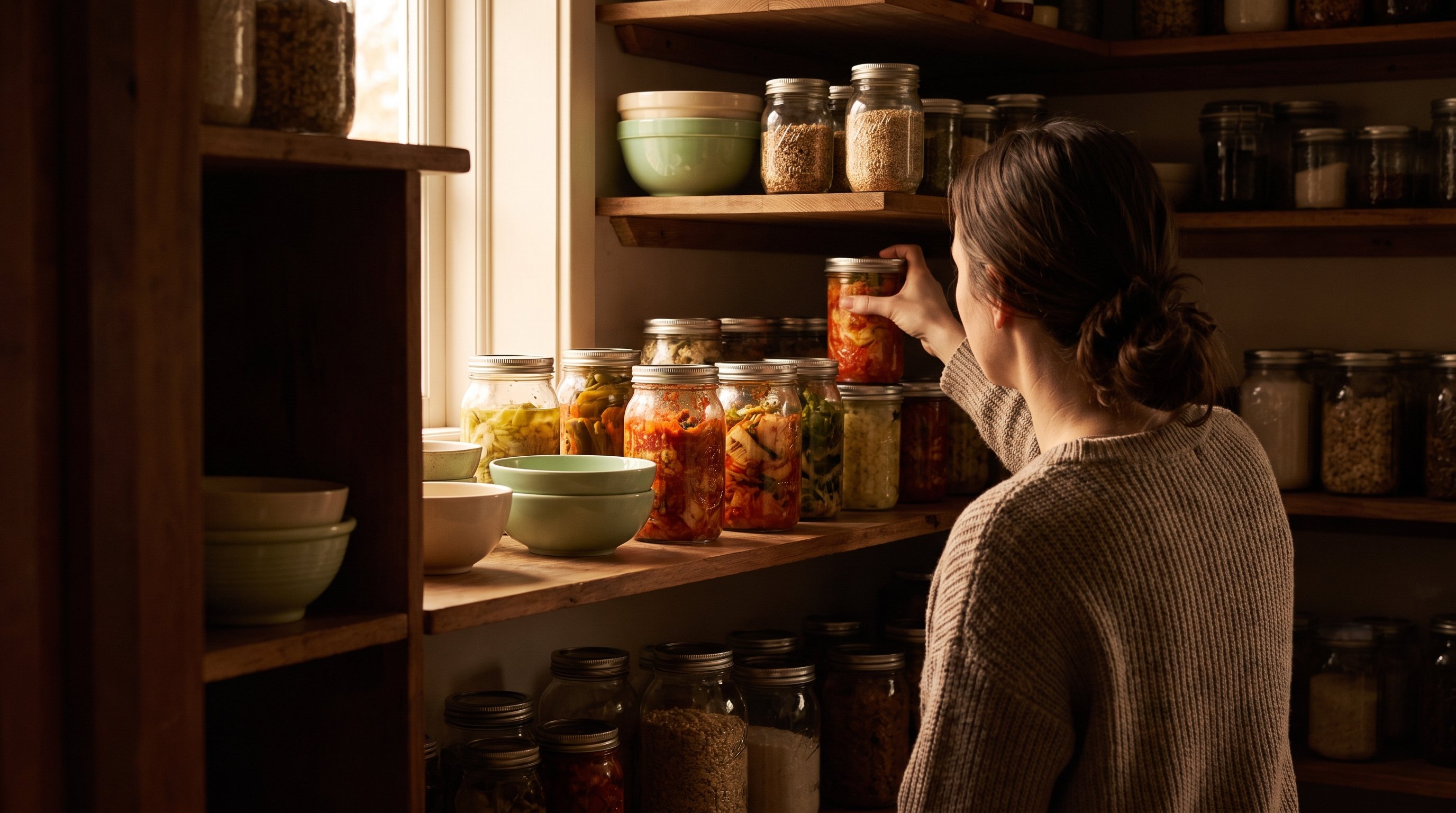
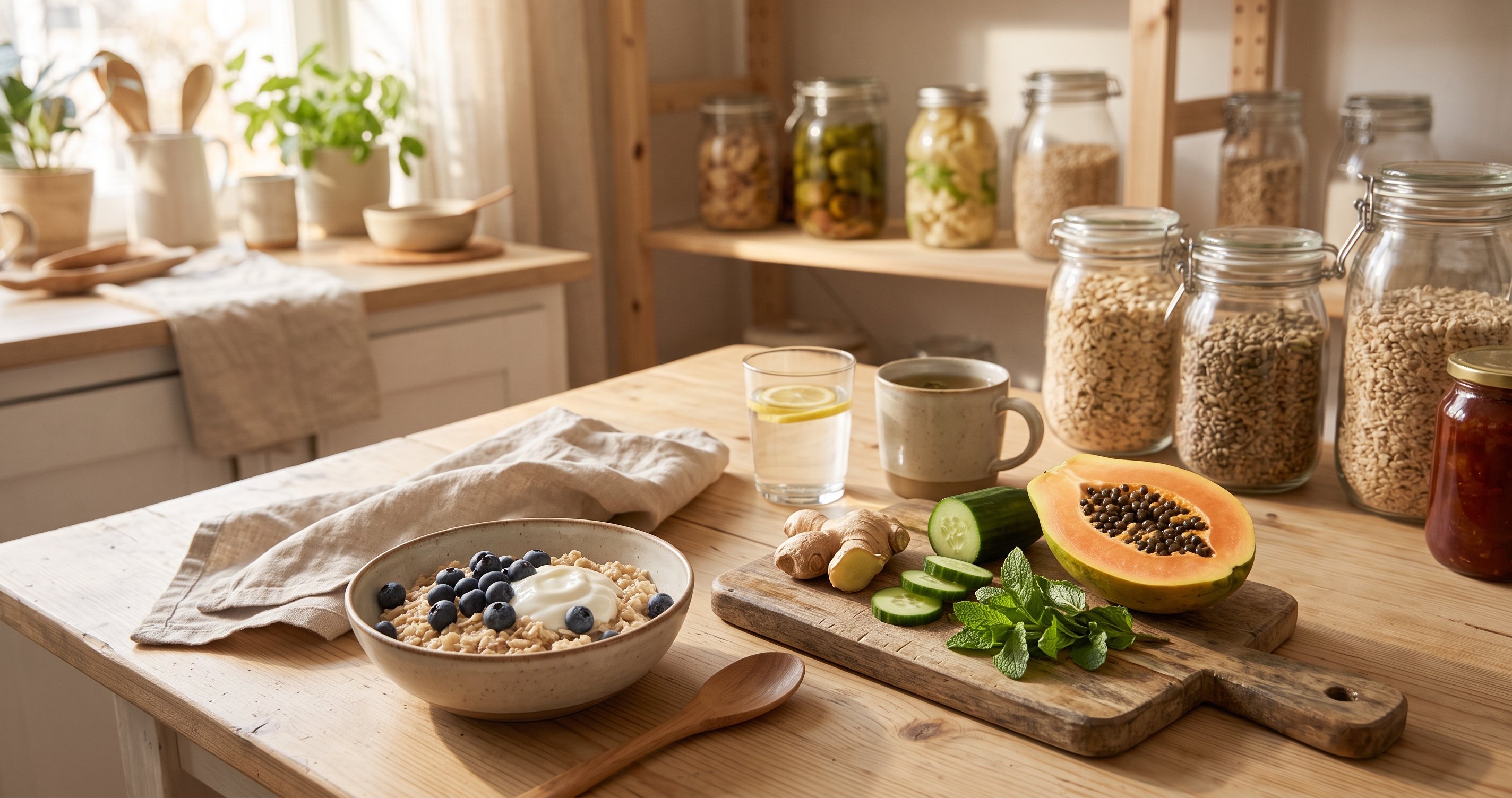
A fermented foods list usually includes somewhere around 10 to 15 common options - yoghurt, kefir, sauerkraut, kimchi, miso, tempeh, kombucha, and a handful of pickled vegetables made the traditional way.
These foods go through a process where bacteria or yeast break down sugars and starches, which is what gives them that tang and, in many cases, live cultures that survive into the jar or glass you're eating from.
This guide covers which foods actually belong on the list, how much of them is worth eating, how to build the habit without it feeling like a chore, and where a meal planning tool fits into the picture.
Does a Fermented Foods List Actually Work?
The mechanism is simple: fermentation uses bacteria or yeast to convert sugars into acids, gases, or alcohol, and some of those bacteria can still be alive when you eat the food.
Not every fermented food keeps its live cultures - bread is fermented but baked, so the heat ends that story early, while something like raw sauerkraut or kefir keeps more activity intact.
Here's the honest arithmetic: if a daily diet has zero fermented foods and you add one serving of yoghurt or kefir, that's one additional source of live cultures per day where there used to be none.
That's not a dramatic shift. It's a small, repeatable addition, and small repeatable additions are exactly what tends to survive a busy week.
Why This Beats the Harder Alternative
The harder alternative is an overhaul: cutting out whole food groups, following a strict new regimen, or trying to eat perfectly from day one.
Most people don't stick with an overhaul because it asks for too much change too fast, and when life gets busy, the first thing to go is the hardest habit.
Swapping in fermented foods you already sort of like - a yoghurt instead of a different snack, kimchi instead of plain coleslaw - is a substitution, not a restriction.
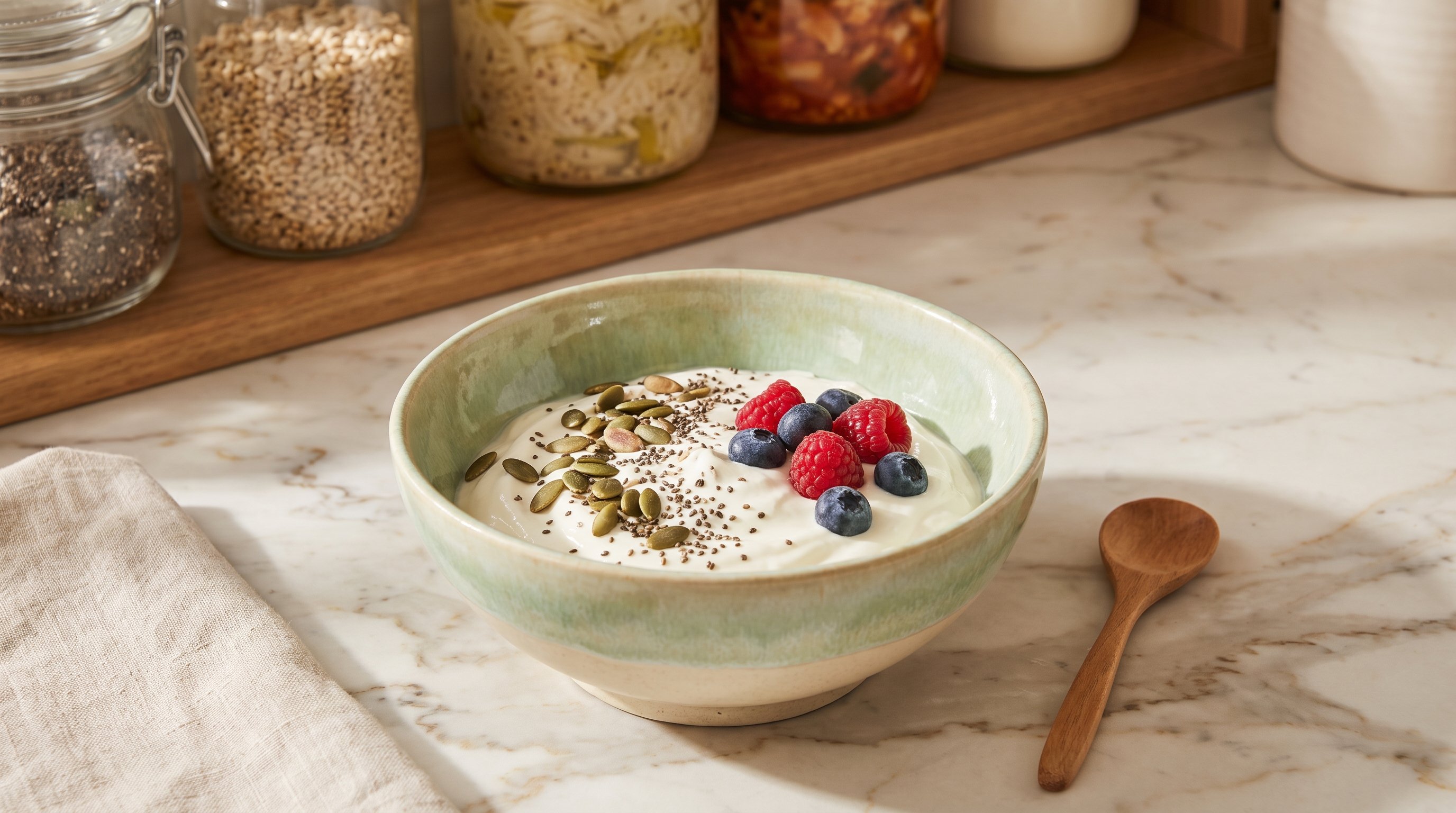
Substitutions are easier to repeat because they don't ask you to give anything up outright, just to choose a different version of something you were eating anyway.
That's the real advantage: not that fermented foods are magic, but that they're easy to fold into meals you're already making.
The Quantity Question: How Much, How Many, How Often
There's no single correct number of servings, because fermented foods vary so much in size, strength, and how they're used in a meal.
A spoonful of miso in a soup is a very different quantity to a full bowl of yoghurt, so thinking in servings per day or per week is more useful than chasing a specific gram count.
Find Your Own Number
Start by picking one or two fermented foods you already enjoy and adding them to meals you already cook, then notice which ones you keep reaching for after a week or two.
| Food | Typical Serving | When To Eat It |
|---|---|---|
Yoghurt | 1 small pot | Breakfast or snack |
Kefir | 1 small glass | Morning or with meals |
Sauerkraut | 2 to 3 tbsp | Alongside main meals |
Kimchi | 2 to 3 tbsp | Alongside rice or noodles |
Miso | 1 tsp in soup | Lunch or dinner |
Kombucha | 1 small glass | In place of soft drinks |
Use this table as a starting point rather than a rule - the right amount is whatever you'll actually eat again tomorrow.
The Practical Question: Fitting Fermented Foods Into a Real Week
The practical problem isn't knowing what fermented foods are - it's remembering to buy them, keep them stocked, and actually use them before they're forgotten at the back of the fridge.
A meal plan built around food you already like makes this easier, because fermented options get slotted into recipes you were going to cook anyway rather than added as an extra task.
A meal planning app works this way - its recipe library includes meals that already feature fermented and probiotic-friendly ingredients, so the shopping list and the habit happen at the same time instead of as separate steps.
Keeping water intake, steps, and weight in one tracker also helps you see fermented foods as one part of a wider routine rather than an isolated fix.
Comparison: Fermented Foods vs Probiotic Supplements
A lot of people land on a choice between eating fermented foods or taking a probiotic supplement, so it helps to line up what each option actually involves.
| Factor | Fermented Foods | Supplement |
|---|---|---|
Cost over time | Often cheaper per week | Ongoing purchase cost |
Food variety | Wide range of flavours | Single capsule format |
Meal integration | Fits into existing meals | Separate daily step |
Strain consistency | Varies by product and batch | Listed on label |
Ease of starting | Needs some meal planning | Quick to begin |
Neither option is wrong, and plenty of people use both - the table just helps you decide where to put your effort first.
The Forbidden Promise, Answered Honestly
No fermented food targets a body area, and none of them will reduce fat from one specific part of the body - that's not how digestion or metabolism works, no matter what a jar label implies.
There's also no overnight result here and no fermented food that cures or reverses anything.
What's real is smaller and steadier: adding fermented foods is one habit among several that can support how you eat day to day, alongside things like fibre intake, water, and movement.
That's a less exciting answer than a guarantee, but it's the honest one.
Levers That Change the Result
Three things make the biggest difference to whether a fermented foods habit actually sticks.
What Moves the Needle
- Variety over volume - rotating between yoghurt, kefir, sauerkraut, kimchi, and miso covers more ground than eating a large amount of just one.
- Consistency over perfection - a small serving most days beats a large batch once a month that you then forget about.
- Pairing with fibre - eating fermented foods alongside vegetables, whole grains, or legumes gives any live cultures something to work alongside.
How Long Until You See Results?
This is where most people quit - they expect a quick, obvious change and when it doesn't show up in a few days, they stop.
Digestive and dietary habits tend to settle in gradually rather than all at once, so it's worth thinking in weeks rather than days.

The goal in the early stretch isn't a dramatic shift - it's simply keeping fermented foods on the plate often enough that they become normal rather than a novelty.
Your First Four Weeks
The order here matters more than hitting an exact number each week - start small and let the habit widen.
| Week | Focus | Example |
|---|---|---|
Week 1 | Add one fermented food | Yoghurt at breakfast |
Week 2 | Add a second food | Sauerkraut with dinner |
Week 3 | Rotate between three | Yoghurt, kraut, miso soup |
Week 4 | Build a weekly rhythm | Fermented food most days |
What Stalls Progress
Buying It Once and Forgetting It Exists
Keep fermented foods somewhere visible in the fridge, or build them into a meal you cook weekly, so they're not an afterthought behind everything else.
Only Trying One Food and Deciding It's Not for You
Taste and texture vary widely across the list, so if kombucha isn't your thing, kefir or miso might land better - don't judge the whole category on one item.
Treating It As a Fix Rather Than a Habit
Fermented foods work best as a steady part of meals, not a short burst you abandon once you don't notice an instant change.
Skipping the Rest of the Plate
Fermented foods pair with fibre-rich vegetables and whole grains, so a diet otherwise low in those won't get as much from the addition.
No Structure Around Meals in General
Without a plan, fermented foods are easy to forget - a simple weekly meal structure makes it far easier to remember to include them.
Why Probiotic Diet Works
Building a fermented foods habit is easiest when it's baked into meals you were cooking anyway, not treated as an extra task on top of everything else.
Probiotic Diet brings this together with a recipe library built around probiotic-friendly meals, light workouts, and challenges to keep you consistent, plus trackers for steps, water, and weight so the whole routine lives in one place.
Final Thoughts
A fermented foods list doesn't need to be long or complicated - a few staples rotated through the week cover most of the ground worth covering.
Start with one food you already like, build from there, and let Probiotic Diet handle the planning and tracking so the habit has somewhere to live.
Frequently Asked Questions
Do I Need to Eat Fermented Foods Every Day to Get Anything From Them?
No single daily number is required - eating them regularly across the week, even a few times, is a reasonable starting point. More often tends to build the habit faster than an occasional large serving.
Isn't This Just Another Trend That Won't Actually Do Anything?
Fermented foods aren't a trend invention - they're long-standing foods like yoghurt and miso that happen to contain live cultures from the fermentation process. The honest claim is modest: they're a useful addition to meals, not a fix on their own.
What If I Don't Like the Taste of Most Fermented Foods?
The list is wide enough that taste isn't really a barrier - yoghurt and kefir are mild, while kimchi and kombucha are more intense. Trying a few different ones before giving up on the category usually turns up at least one you'll eat again.
Why Do People Stop Eating Fermented Foods After a Few Weeks?
Usually because they run out, forget to restock, or don't have a meal plan that includes them, so the habit quietly drops off. A meal planning tool like Probiotic Diet addresses this by building fermented and probiotic-friendly options directly into its recipe plans, so restocking and planning happen together instead of being separate chores.