Best Foods for Gut Health: A Simple Weekly Starter Plan
ByProbiotic Diet Editorial
Updated onOctober 1, 2026
Two food groups do most of the heavy lifting for gut health: fibre-rich plants and fermented foods. Eat a wider variety of both across a week and you're giving the bacteria in your gut more of what they need to do their job.
The mechanism is simple. Fibre feeds the bacteria already living in your gut, while fermented foods can introduce more of the helpful strains, and a well-fed, varied microbial community tends to support digestion and steady energy.
This guide covers what actually works, how much is worth aiming for, what trips people up, and a four-week starting point you can follow without overhauling your whole kitchen.
Does Eating for Gut Health Actually Work?
Your gut is home to trillions of bacteria, and what you eat is one of the biggest levers you have over which strains thrive.
Fibre is not digested by you - it passes through to your large intestine, where gut bacteria ferment it and produce compounds that support the gut lining.
Fermented foods work differently: they carry live cultures from the fermentation process, which can add to the mix of bacteria already in place.
Do the arithmetic on variety alone. If you eat the same five foods every week, you're feeding a narrow slice of your gut bacteria.
Swap in ten more plant foods across a month and you've roughly tripled the range of fibres on offer, without changing your total calories at all.
Why This Beats the Harder Alternative
The harder alternative is cutting foods out: eliminating entire groups, following rigid rulebooks, hoping willpower carries you through month three.
Restriction fails for a predictable reason - it's hard to sustain something that feels like punishment, and most people quietly drop it within weeks.
Substitution works because it doesn't ask you to give anything up outright. You're swapping white rice for a mix of rice and lentils, or adding yoghurt alongside breakfast instead of removing something else.
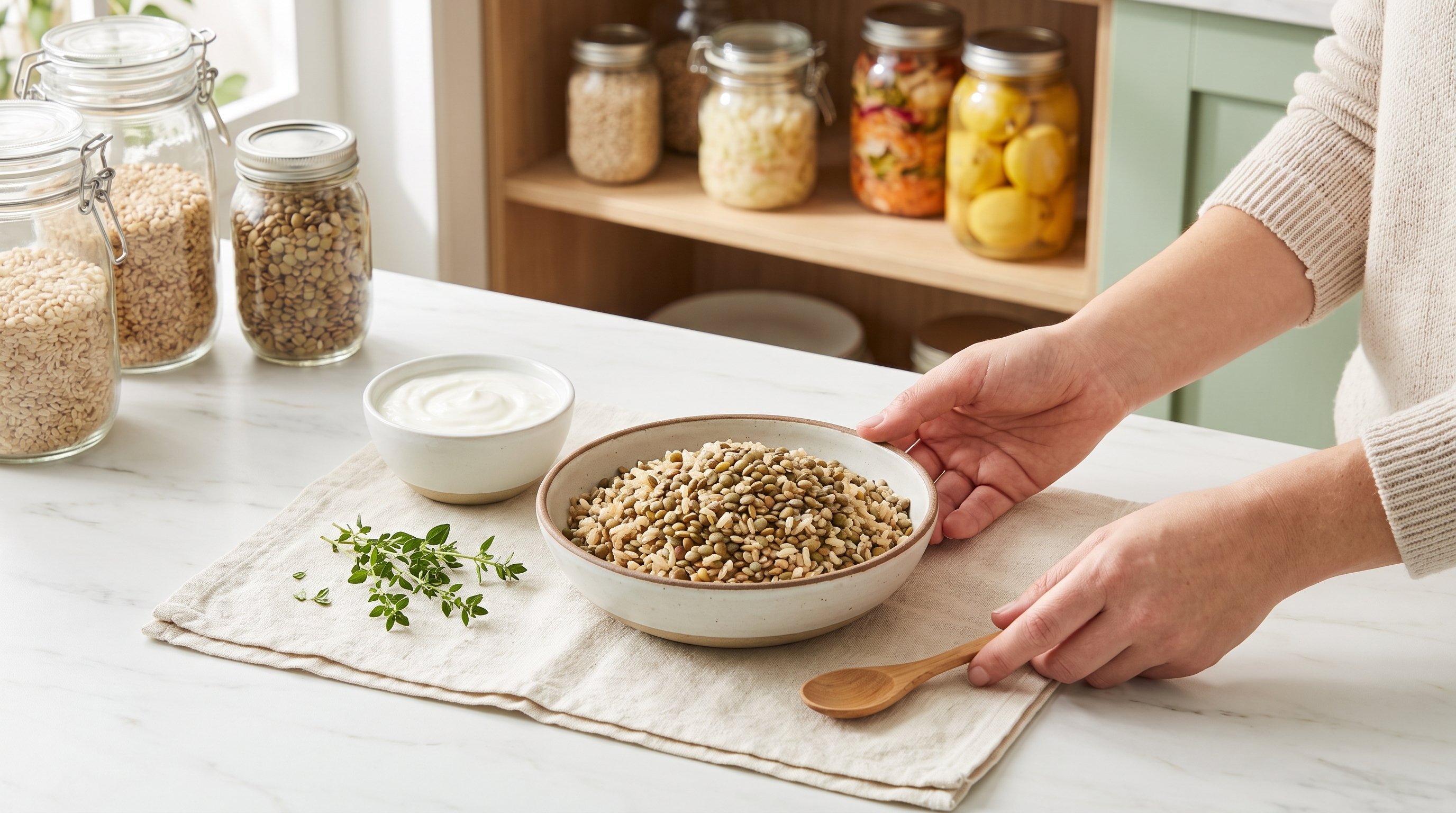
That small shift matters because adherence beats intensity almost every time. A moderate change you keep for months outperforms a dramatic one you abandon after a fortnight.
No single food is magic here - the plan only works if it's easy enough to hold onto on an ordinary Tuesday.
The Quantity Question: How Much, How Often?
There's no single perfect number, but there is a useful pattern: more plant variety, spread across the week, beats one big gut-health meal on a Sunday.
Think in terms of handfuls and servings rather than grams you have to weigh out.
Find Your Own Number
Start with whatever you eat now, then add one extra plant food or one small serving of a fermented food most days - that's the only number you need to track at first.
| Food | Serving | Frequency |
|---|---|---|
Leafy greens | 1 handful | Most days |
Beans or lentils | Half cup | 3-4 times a week |
Yoghurt or kefir | Small pot | Most days |
Mixed vegetables | 2 handfuls | Daily |
Fermented vegetables | Small spoonful | A few times a week |
Use that table as a rough shopping guide, not a strict checklist - hitting three out of five rows most weeks is still progress.
The Practical Question: Making It Fit Real Life
Knowing which foods help is one thing. Actually having them in the fridge, prepped and ready, on a Wednesday night is the real challenge.
That's where a meal plan built around food you already like makes the difference - it removes the daily decision of what to cook and swaps in gut-friendly options without asking you to learn a new way of eating.
Probiotic Diet is built around that idea: a tailored-for-you plan with recipes designed to work probiotic and fibre-rich foods into meals you'd already choose, rather than handing you a restrictive list.
Pair that with simple tracking of what you're eating and drinking, and the guesswork mostly disappears.
Comparison: Supplement, Elimination Diet, or Food First?
Most people weighing up gut health land on one of three routes: a probiotic supplement, an elimination-style diet, or simply eating more varied, fibre-rich and fermented foods.
| Approach | Effort | Variety | Cost | Sustainability |
|---|---|---|---|---|
Probiotic supplement | Low | Single strain | Ongoing | Easy short term |
Elimination diet | High | Narrows over time | Variable | Hard to maintain |
Fermented foods daily | Moderate | Multiple strains | Low | Fits most routines |
High-fibre plants | Moderate | Wide range | Low | Builds gradually |
Combined food approach | Moderate | Widest range | Low | Most sustainable |
A combined food approach ranks well on every column because it doesn't rely on one product or one rigid phase - it's just a wider, steadier pattern of eating.
The Forbidden Promise, Answered Honestly
No, eating gut-friendly foods will not target a specific body area, and the body doesn't work that way - fat loss happens across the whole body, not wherever you'd like it to.
No single food cures anything or reverses a condition, and overnight change isn't realistic either.
What's genuinely on offer is a more varied, fibre-rich and fermented way of eating that supports digestion and can make it easier to hold a steady calorie pattern over time.
That's a quieter promise than a cure, but it's the honest one, and it's the one worth building a routine around.
Levers That Change the Result
Not every change matters equally. These three carry the most weight, in order.
What Moves the Needle
- Variety over volume - eating twenty different plant foods a week feeds more types of gut bacteria than eating a large amount of just two or three.
- Consistency over intensity - a small fermented-food habit kept for months beats a strict gut-health week you can't repeat.
- Pairing fibre with fermented foods - adding yoghurt or kefir alongside a fibre-rich meal gives bacteria both the fuel and some fresh reinforcements at once.
How Long Until You See Results?
This is where most people quit - they expect to feel different within days and give up when nothing dramatic happens.
Gut bacteria respond to what you feed them, but the shift is gradual rather than sudden, and it's tied to how consistently you keep the new pattern going, not to any single meal.

Rather than watching for a specific marker, treat the first few weeks as the habit-building phase and let the routine itself be the win.
Your First Four Weeks
Order matters more than perfection here - build the habit before you worry about getting every serving exactly right.
| Week | Focus |
|---|---|
Week 1 | Add one fermented food daily |
Week 2 | Add two extra plant foods daily |
Week 3 | Build a repeatable breakfast and lunch |
Week 4 | Track consistency, not perfection |
By week four, the goal isn't a flawless record - it's a routine that still feels doable when life gets busy.
What Stalls Progress
Only Eating One Fermented Food on Repeat
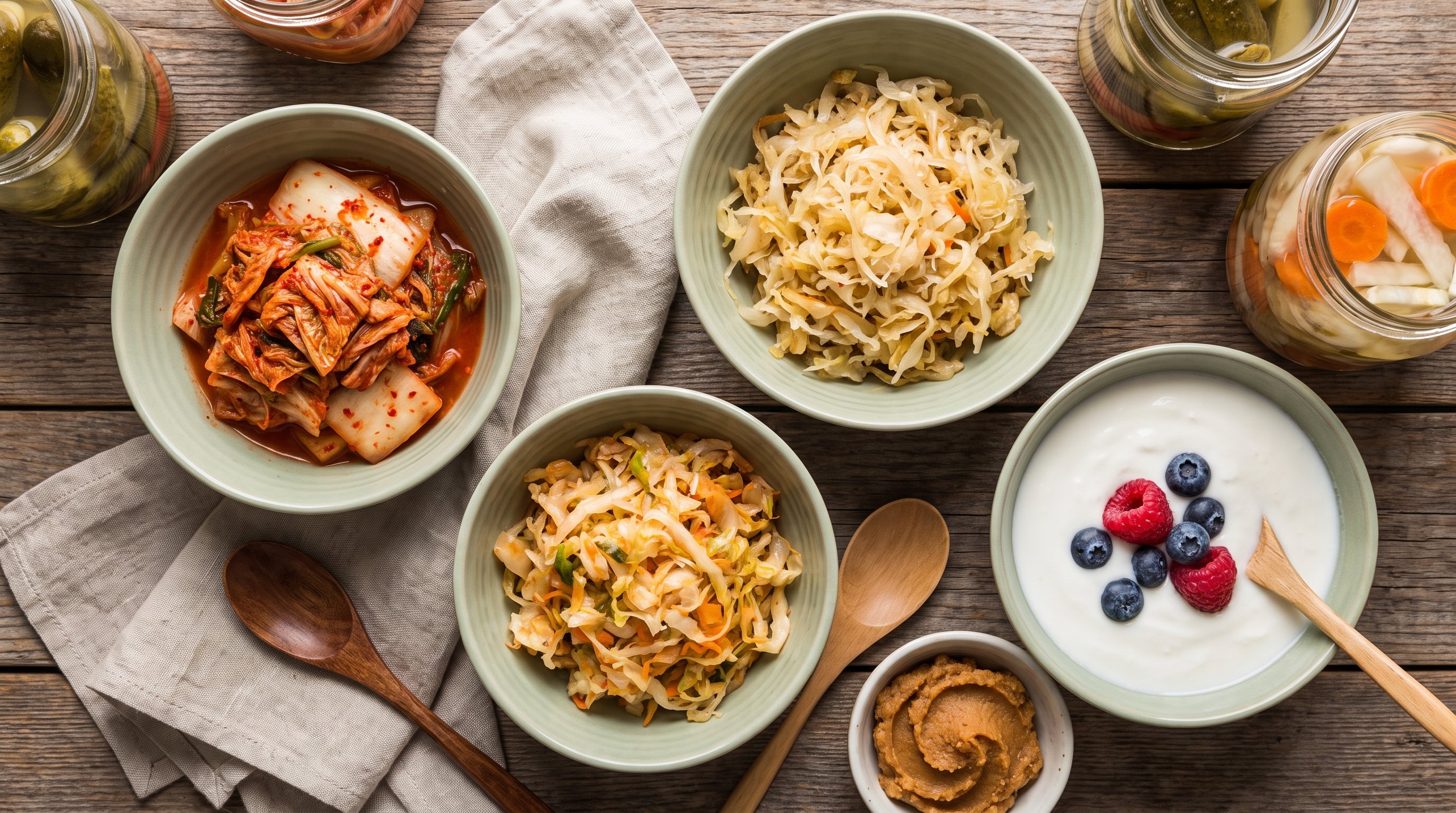
Yoghurt every day is a good start, but rotating in kefir, sauerkraut or other fermented options brings in different strains rather than just more of the same one.
Adding Fibre Too Fast
A sudden jump from low-fibre to high-fibre eating can leave you bloated and ready to quit - build it up gradually over a couple of weeks instead.
Treating It As a Short-Term Fix
A two-week push and then a return to old habits won't hold - the benefit comes from the pattern you keep, not the burst you started with.
No Plan for Busy Days
Gut-friendly eating falls apart fastest when the week gets chaotic, so having two or three easy go-to meals ready matters more than having a perfect ideal meal you never actually cook.
Chasing One Miracle Ingredient
Looking for the single best food to fix everything misses the point - it's the width of variety across the week that does the work, not any one item.
Why Probiotic Diet Works for This
Building gut-friendly habits is easier when the planning is already done for you.
Probiotic Diet brings together over 1000 recipes built around probiotic-friendly eating, simple trackers for water, weight and steps, and challenges designed to keep you consistent rather than relying on motivation alone.
Final Thoughts
Gut health isn't about finding one perfect food - it's about widening what you already eat, a little at a time, and keeping that going long after the novelty wears off.
Start small this week, add one fermented food and one extra plant food to your usual meals, and let Probiotic Diet handle the planning if you'd rather not think it through alone.
Frequently Asked Questions
Do I Need to Buy Expensive Specialty Foods for Gut Health?
No - beans, oats, yoghurt and seasonal vegetables cover most of what matters, and they're usually among the cheaper items in the shop. Variety matters far more than any single premium product.
Isn't This Just Another Diet That Will Restrict What I Eat?
It's the opposite approach - instead of cutting foods out, you're adding variety in alongside what you already eat. Nothing here asks you to eliminate a food group.
What If Fibre and Fermented Foods Upset My Stomach at First?
That usually settles once your gut bacteria adjust to the new fuel, so building up gradually over a couple of weeks tends to help. Smaller servings more often work better than one large change overnight.
What Happens If I Fall Off Track for a Week or Two?
Nothing is lost - just pick the routine back up where you left it, since gut health responds to the pattern over months, not to one missed week. Probiotic Diet's trackers make it easy to see where you left off and get back to it without starting over.