Foods That Reduce Bloating: What Works and When to Eat Them
ByProbiotic Diet Editorial
Updated onOctober 1, 2026
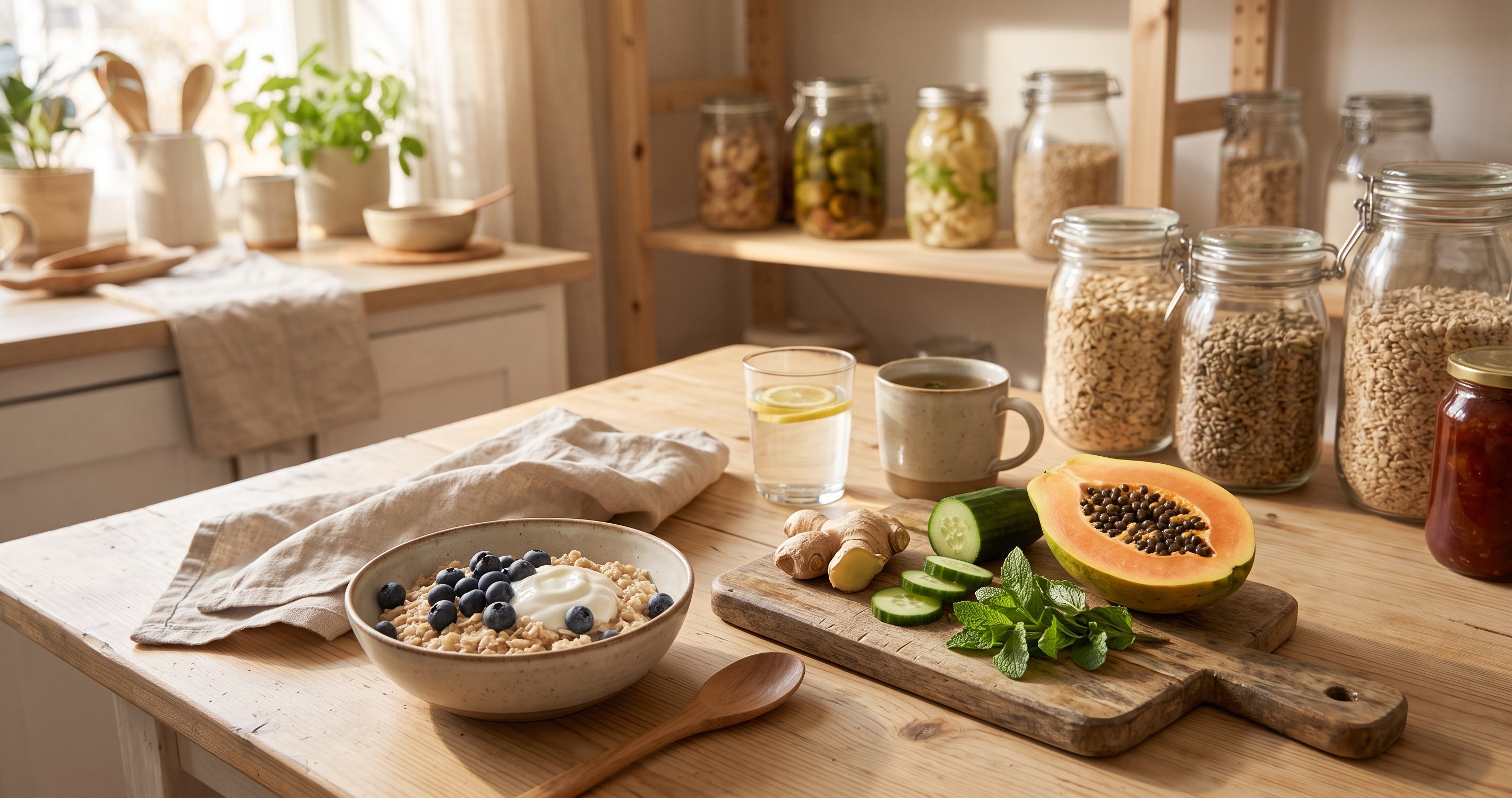
Swap two or three bloat-triggering habits a day for gentler alternatives and your gut gets less gas to deal with by the next meal. That is the whole mechanism - less fermentable load going in, less pressure coming back out.
Bloating mostly comes down to gas production and how fast things move through your gut. Certain foods ferment quickly and produce more gas, others move things along gently without the backup, and swapping one for the other is simple maths, not magic.
This guide covers which foods tend to help, how much actually matters, what the first month might look like, and where most people quietly give up before anything changes.
Do Foods That Reduce Bloating Actually Work?
Bloating happens when gas builds up faster than your gut clears it, or when water sits in the gut lining longer than it should. Foods that reduce bloating generally do one of two things - they ferment slower, or they help water and waste move through on schedule.
The Arithmetic Behind It
Say a meal heavy in rapidly fermenting carbs produces a noticeable amount of gas within an hour. Swap half that meal for slower-fermenting vegetables and whole grains, and you have roughly halved the fermentable load without changing portion size at all.
That is not a guarantee of comfort, it is a smaller input producing a smaller output. The rest comes down to consistency across meals, not one perfect plate.
Why This Beats the Harder Alternative
The harder alternative is cutting out entire food groups and hoping the bloating disappears. It might, for a while, but restriction this strict is difficult to sustain past a few weeks for most people.
Substitution is easier to keep up than elimination. Swapping a carbonated drink for still water, or a large white-bread sandwich for a smaller wholegrain one, asks less of your willpower than banning entire categories of food.
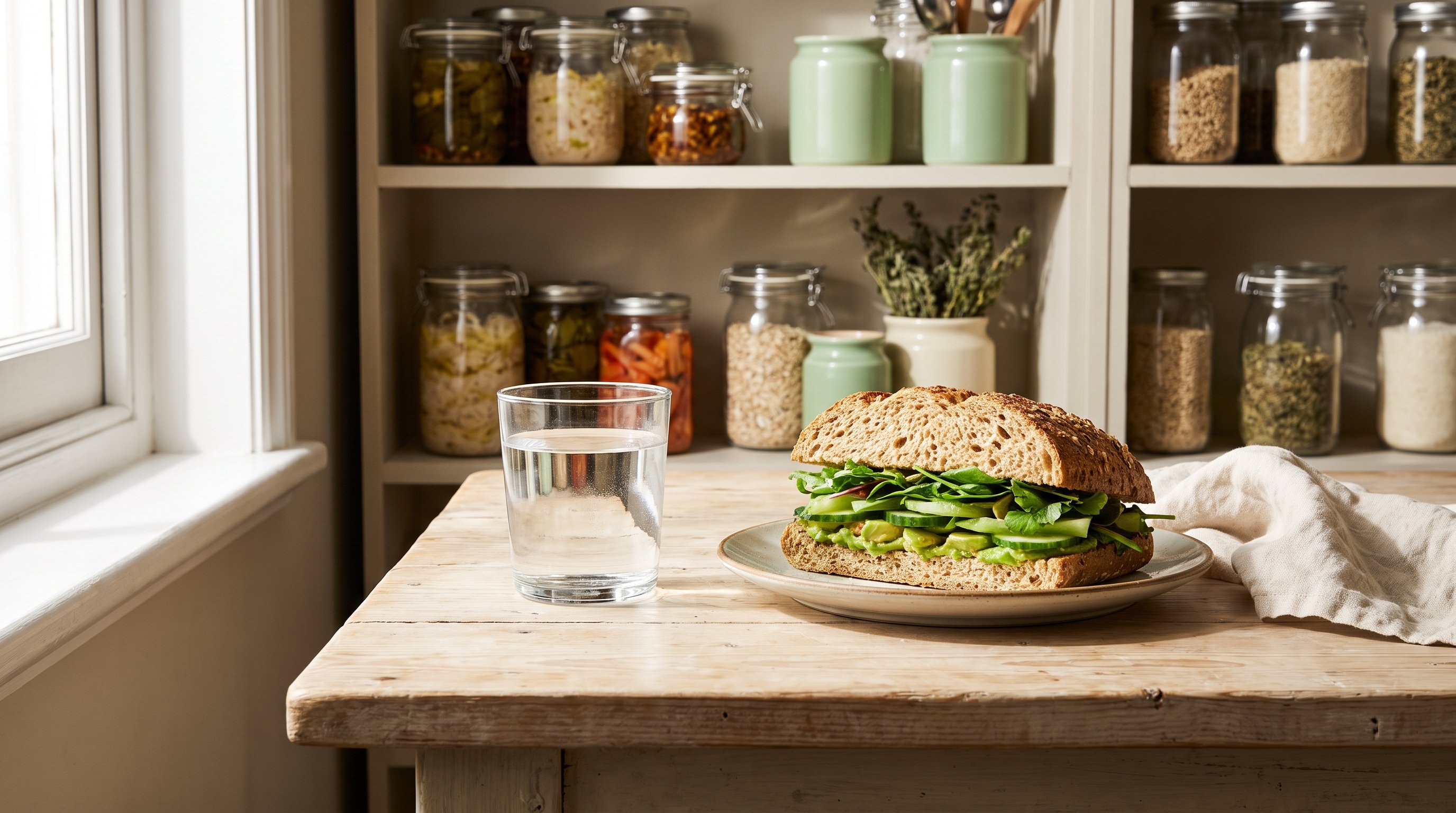
A plan built on substitution also survives a bad week. Miss a day of strict elimination and it can feel like starting over, but miss a day of gentle swapping and you just pick the next meal back up.
That is the real adherence argument - not which approach works best on paper, but which one you will still be doing in a month.
The Quantity Question - How Much and How Often
There is no single correct portion of ginger, fennel or yoghurt that switches off bloating. What matters more is frequency - small, steady inclusions across most meals beat one large serving once a week.
Find Your Own Number
Start with one swap per main meal and track how you feel over a few days, then adjust up or down from there. Your own gut's response is the only number that actually matters, and it will differ from the next person's.
The table below is a starting point, not a prescription. Use it to build a meal that feels lighter, then repeat what works.
| Food | Typical Use | Frequency |
|---|---|---|
Ginger | Small amount in tea or cooking | Daily if tolerated |
Fennel | Handful raw or in salad | A few times a week |
Plain yoghurt | Small bowl or side | Most days |
Cucumber | Sliced, added to meals | Daily if tolerated |
Oats | Small bowl at breakfast | Most mornings |
The Practical Question - Fitting This Into a Real Day
Knowing which foods help is one thing. Actually building meals around them on a busy weekday is the part that trips most people up.
This is where a meal plan built around food you already like makes the difference between a good intention and an actual habit. Probiotic Diet lays out probiotic-friendly recipes and trackers so the gentler swap is the easy option, not the one you have to think hard about at 7pm.
Keeping water intake, meals and how you feel in one place also makes it easier to spot your own patterns over time, rather than guessing after the fact.
The Low FODMAP Trend - What's Useful, What's Arbitrary
Low FODMAP eating has become a common search term alongside bloating, and the useful part is real - some carbohydrates do ferment faster than others, and reducing them can lower gas production for some people.
The arbitrary part is treating it as a permanent, all-or-nothing rulebook. Full elimination diets of this kind are strict, hard to sustain, and often unnecessary for someone whose bloating is mild or occasional rather than persistent.
A lighter version - noticing which specific foods seem to trigger you and trimming those - captures most of the benefit without the rigidity.
Comparison - Gentle Swaps Versus Strict Elimination
Most people weighing this up are deciding between two paths - small, steady substitutions or a stricter elimination approach. Here is how they stack up on the things that actually decide whether you stick with it.
| Factor | Gentle Swaps | Strict Elimination |
|---|---|---|
Daily effort | Low, one swap at a time | High, constant label reading |
Social meals | Easy to manage | Often awkward |
Time to build habit | A few weeks | Can take longer to settle |
Risk of giving up | Lower | Higher |
Flexibility | High | Low |
The Forbidden Promise, Answered Honestly
No food targets your stomach specifically and flattens it overnight. The body does not work that way - bloating eases as a whole-gut response, not a localised one, and nothing you eat tonight changes your shape by morning.
The honest answer is slower and less exciting - steady swaps, paid attention to over weeks, tend to reduce how often and how severely you feel bloated. That is the real outcome worth aiming for, not a before-and-after photo.
Levers That Change the Result
Not every change carries equal weight. These three matter more than the rest, in roughly this order.
What Moves the Needle Most
- Eating pace - slowing down reduces how much air you swallow with each meal, which is an easy win most people skip.
- Consistency over novelty - repeating a few foods that work for you beats constantly trying new ones and resetting your gut's adjustment.
- Hydration alongside fibre - more fibre without enough water can make things worse, so the two need to rise together.
How Long Until You See Results?
This is where most people quit - somewhere around the point where nothing dramatic has happened yet and the swaps start to feel pointless.
Change here tends to be gradual rather than sudden, showing up as fewer uncomfortable afternoons rather than one obvious turning point. Staying with the gentler swaps past the first flat stretch is usually what separates people who notice a difference from people who stop too early.
Your First Four Weeks
Order matters more here than exact numbers. Build the habit before you try to perfect it.

| Week | Focus | Goal |
|---|---|---|
Week 1 | Swap one meal a day | Notice which foods sit heavy |
Week 2 | Add water tracking | Pair fibre with fluids |
Week 3 | Slow eating pace | Fewer rushed meals |
Week 4 | Repeat what worked | Build a steady rotation |
What Stalls Progress
Changing Everything at Once
A full overhaul in one day is hard to maintain and easy to abandon. Pick one meal to start with and let the rest follow once that sticks.
Skipping Water While Adding Fibre
More fibre without more fluid can make bloating worse, not better. Increase both together, not one before the other.
Eating Too Fast to Notice Patterns
Rushed meals make it hard to tell which foods are actually the problem. Slowing down even slightly gives you the information you need to adjust.
Expecting a Straight Line
Some days will feel better than others regardless of what you eat. Judge progress over weeks, not meal by meal.
Giving Up After One Flat Week
The first week without dramatic change is normal, not a sign that the approach has failed. Staying consistent past that point is usually where things start to shift.
Why Probiotic Diet Works for This
Knowing which foods help is the easy part. Building meals around them, day after day, without it feeling like a chore, is where most plans quietly fall apart.
Probiotic Diet brings together over 1000 probiotic-friendly recipes, water and weight trackers, and healthy challenges designed to keep you consistent - the exact combination that turns a gentle swap into an actual habit rather than a one-off good day.
Final Thoughts
Bloating responds to steady, small changes more than any single food. Pick one swap, keep it up for a few weeks, and let the pattern tell you what your gut actually wants.
If you want that swap to be easier to stick with, Probiotic Diet is built to make the gentler choice the obvious one, meal after meal.
Frequently Asked Questions
Which Single Food Reduces Bloating the Most?
No single food does the job alone - bloating responds to patterns across meals, not one ingredient. Ginger, fennel and plain yoghurt are reasonable places to start, but consistency matters more than which one you pick.
Isn't This Just the Same As Cutting Carbs?
No - this is about swapping fast-fermenting foods for slower ones, not cutting carbohydrates as a category. Oats and wholegrains stay on the plate, just alongside smaller portions of the foods that tend to cause more gas.
What If I Don't Have Time to Plan Meals Around This?
That is the exact gap a structured meal plan closes, since the swaps are already built into the recipes rather than something you have to work out yourself. Probiotic Diet lays these out as ready meals so the planning step is already done.
Why Does Bloating Come Back After a Good Week?
A single good week does not change your gut's habits permanently, and old patterns can resurface the moment the swaps stop. Treating this as an ongoing rhythm rather than a short fix is what keeps the results steady.