Gut Health Foods: How to Build Meals With a 4-Week Plan
ByProbiotic Diet Editorial
Updated onOctober 1, 2026
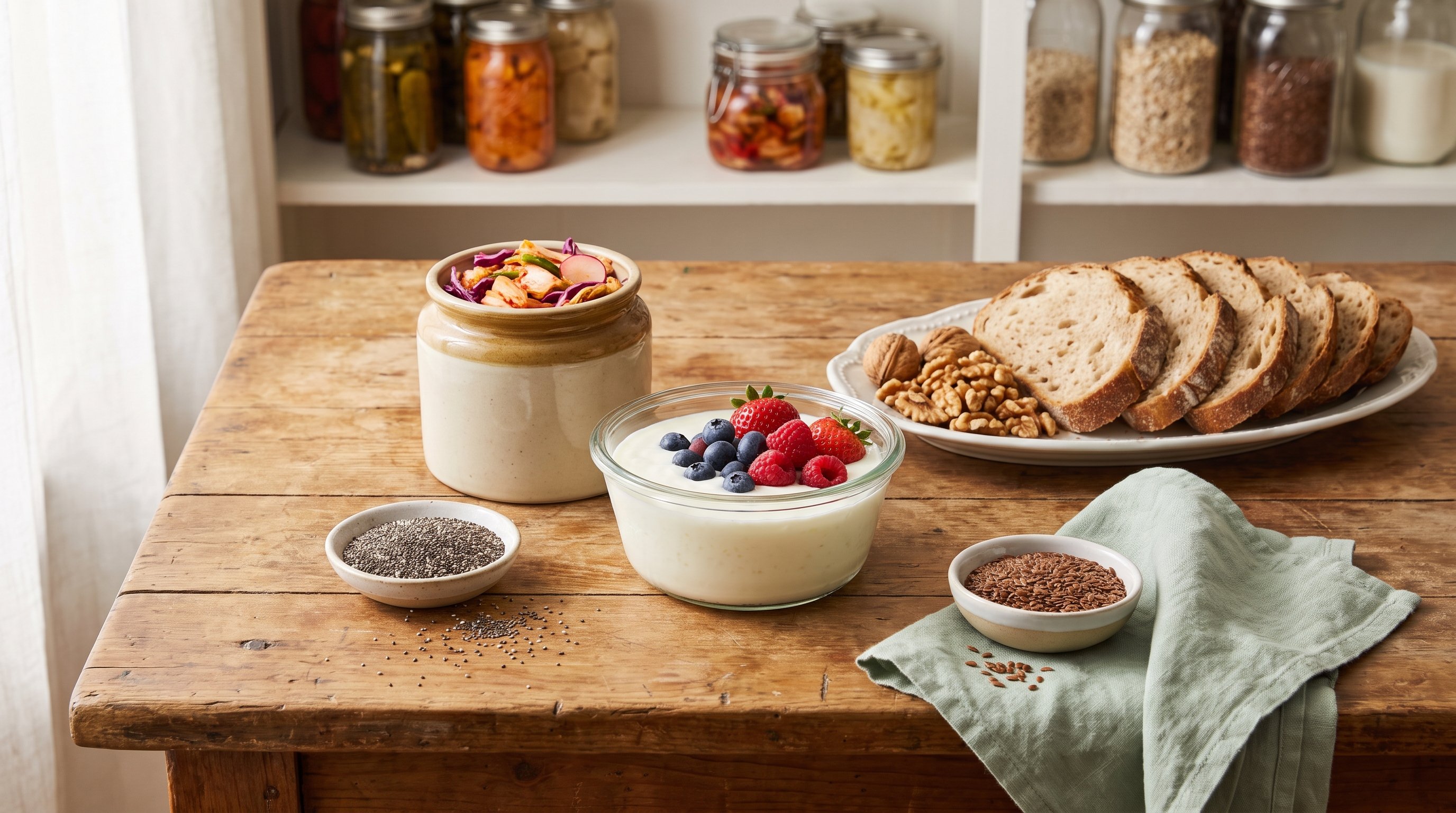
Swap two or three meals a week for something richer in fibre and fermented ingredients, and you've already changed what's feeding your gut bacteria. That's the whole mechanism behind this approach - not a cleanse, not a reset, just different raw material for the microbes already living in your digestive tract.
Your gut bacteria eat what you eat. Feed them fibre, resistant starch and live cultures and they produce different byproducts than when they're fed mostly refined carbs and little else - that shift is the entire case for this way of eating.
This guide covers whether this approach actually does anything measurable, how much you need and how often, a simple four-week way to start, and the habits that tend to stall people before they get anywhere.
Does Eating for Gut Health Actually Work?
The mechanism is straightforward. Fibre and resistant starch reach the large intestine mostly undigested, where gut bacteria ferment them - that fermentation is how those bacteria get energy and how they produce compounds that support the gut lining.
Fermented foods add live microbial cultures directly, on top of whatever's already there. More fibre and more variety in what you eat tends to mean more variety in the bacteria that can thrive, simply because different microbes prefer different fuel.
Here's the honest arithmetic. If a typical day includes one source of fibre and zero fermented foods, and you move to three fibre sources plus one fermented food, you've roughly tripled the fibre variety and added a food group that wasn't there at all - that's a real, countable change, even before anything about how you feel.
What it won't do is work overnight or target one part of the body. It's a slow shift in the environment your gut bacteria live in, not a single meal doing a single job.
Why This Beats the Harder Alternative
The harder alternative is cutting things out - eliminating food groups, counting every gram, following rules that only work while you've got the willpower to follow them. That approach has a short shelf life for most people.
Adding fermented and fibre-rich foods works differently. You're not removing the pasta, you're adding a side of fermented vegetables or swapping white rice for a bean-and-grain mix - the deficit or the change happens because the new food displaces some of the old, not because you white-knuckle your way through a ban list.
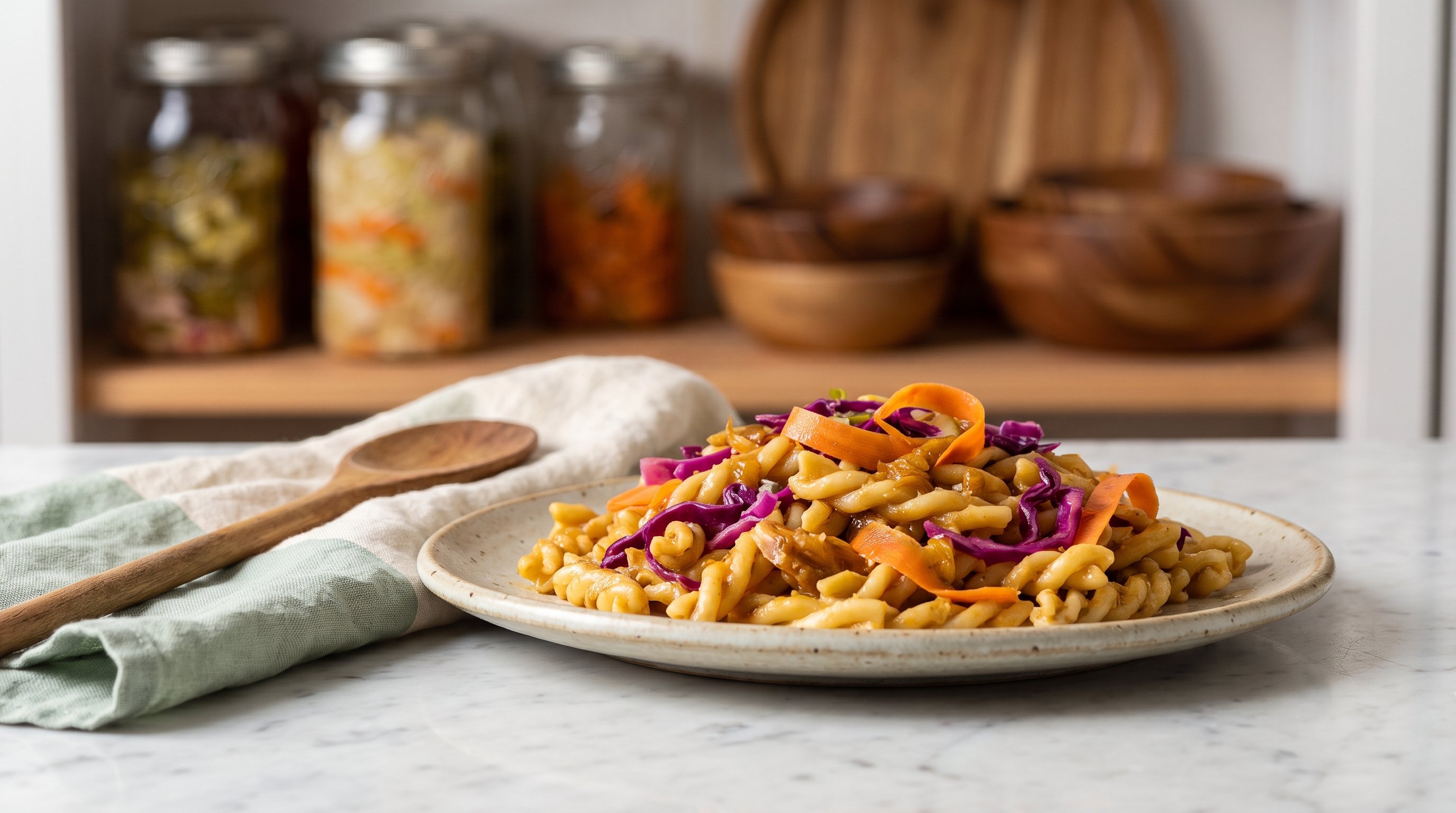
Substitution is easier to keep up than restriction because it doesn't ask you to feel deprived at every meal. You're still eating foods you like - there's just more fibre and more fermented variety mixed in.
That's the whole adherence argument. A plan you can actually keep doing beats a stricter plan you quit in a fortnight, every time, because the quiet plan is the one still running in month three.
How Many Gut Health Foods Do You Actually Need?
There's no single number that applies to everyone, because it depends on what you're already eating. The more useful question is relative: how much more variety and fibre are you adding compared with last month.
Find Your Own Number
Start by counting how many different plant-based foods - vegetables, fruits, whole grains, beans, nuts, seeds - show up across your week, then try to add two or three new ones without removing what's already working.
A rough guide for building a week looks like this - treat it as a starting point you adjust, not a rule.
| Food Type | How Often | Example |
|---|---|---|
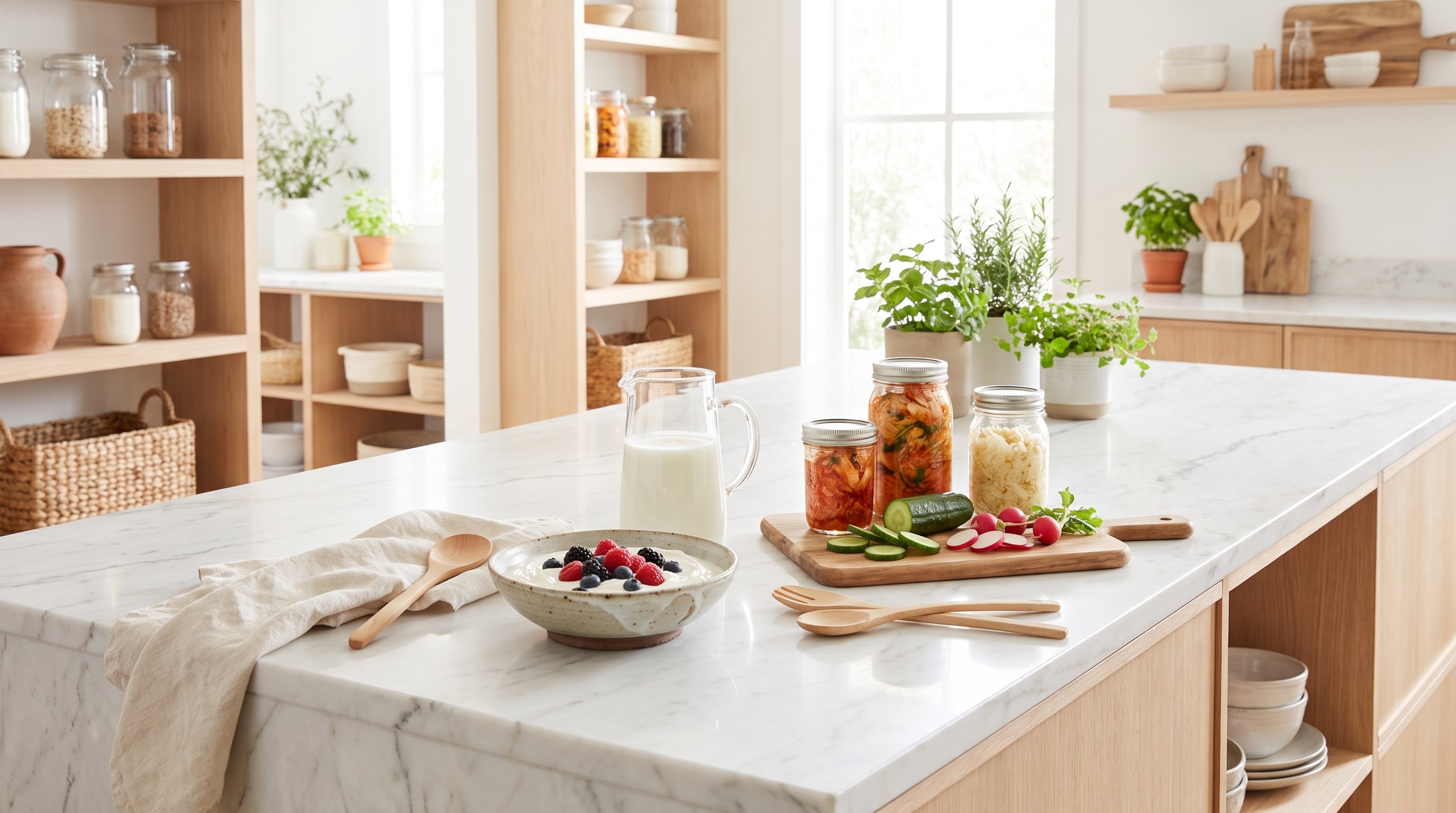
Fermented food | Few times a week | Yoghurt or kimchi |
Fibre-rich vegetables | Most meals | Leafy greens, broccoli |
Whole grains | Daily | Oats, brown rice |
Legumes | A few times a week | Lentils, chickpeas |
Varied fruit | Daily | Berries, apples, pears |
None of these numbers are fixed targets you have to hit perfectly. They're a starting shape for the week that you can bend around what you actually like eating.
Making It Practical: What to Actually Put on Your Plate
Knowing the categories is one thing. Working out what to cook on a Tuesday when you're tired is the part that actually determines whether this sticks.
This is where a meal plan built around food you already like matters more than any single ingredient. Probiotic Diet turns the categories above into actual recipes, with over 1000 options to pick from, so you're choosing a dinner, not assembling a nutrition chart from scratch.
It also keeps steps, water intake, weight and fasting windows in one place, so the food side of things sits next to the rest of your routine instead of living in a separate notebook.
Choosing Between DIY Food Swaps and a Structured Plan
Most people land at a decision point. Keep experimenting food by food, or follow something more structured that does the planning for you.
Both can work. The difference tends to be how much time and decision-making you want to spend on it each week.
| Approach | Effort Needed | Structure |
|---|---|---|
DIY food swaps | High, ongoing | None provided |
Recipe book | Medium | Fixed, not flexible |
Elimination diets | High | Rigid rules |
Counting every gram | Very high | Strict tracking |
Guided meal plan app | Low to medium | Flexible, built in |
There's no wrong answer here. The right one is whichever you'll still be doing in a few months.
What This Approach Won't Do: Spot Reduction or Overnight Fixes
No, and it's worth being direct about that. The body doesn't let you choose where fat is gained or lost, so no food, fermented or otherwise, can target one area.
There's also no overnight fix. Gut bacteria shift gradually as the food supply changes, not in a single sitting, and nothing here cures, treats or eliminates a digestive condition.
The real answer is quieter than that. Eating more fibre and more fermented variety, consistently, changes the environment your gut bacteria live in over time - that's a genuine mechanism, just not a dramatic one.
Levers That Change the Result
Not every change carries equal weight. These three matter most, in order.
What Actually Moves the Needle
- Variety over volume - a wider range of plant foods tends to matter more than eating huge amounts of just one or two.
- Consistency across weeks - a fermented food eaten most weeks beats one eaten once and forgotten.
- Fibre as a daily baseline - vegetables, whole grains and legumes showing up most days builds the steady supply gut bacteria rely on.
How Long Until You See Results?
This is where most people quit - somewhere around the point they expected to feel different and don't yet. Digestive comfort and energy tend to be the first things people notice, but the timing varies enough from person to person that a firm number would be a guess.

What's more useful than a countdown is sticking with the pattern long enough for it to become normal - that's usually measured in weeks, not days.
Your First Four Weeks
The order matters here more than hitting any specific number. Build the habit before you try to perfect it.
| Week | Focus | Goal |
|---|---|---|
Week 1 | Add one fermented food | Make it a habit |
Week 2 | Add two fibre sources | Build on week 1 |
Week 3 | Increase variety | New vegetables, grains |
Week 4 | Review what stuck | Keep, adjust, repeat |
What Stalls Progress
Doing It All at Once
Overhauling every meal in week one tends to burn out fast - pick one or two swaps and let them settle before adding more.
Only Eating One Fermented Food
Relying on a single source misses the variety that makes this work - rotate between a few different fermented foods across the week.
No Plan for Busy Days
The days you're rushed are the days you fall back on old habits - having a few quick go-to meals ready removes that decision entirely.
Expecting a Fast, Visible Change
Looking for a dramatic shift in days sets an expectation this way of eating was never built to meet - judge it over weeks instead.
Tracking Nothing at All
Without some way to see what you've actually eaten, it's easy to assume you're doing more than you are - a simple tracker closes that gap.
Why Probiotic Diet Works for This
Everything above works better with fewer decisions standing between you and the next meal. Probiotic Diet builds that structure in, with a tailored plan drawn from its recipe library so fermented and fibre-rich foods show up as dinner, not homework.
It also brings in light workouts, motivating challenges and nutrition guides written by nutrition experts, trainers and psychologists, so the food side of things sits inside a wider routine rather than standing alone.
Final Thoughts
This approach isn't a dramatic fix, and nobody should expect it to be. It's a steady, low-effort shift in what you're feeding the bacteria already doing their job in your gut.
Start with one swap this week, keep it going, add the next one when it feels easy - and if you want the planning done for you, Probiotic Diet turns that whole process into a plan you just follow.
Frequently Asked Questions
Will This Support Weight Management?
It can support a routine where meals are more filling and less reliant on refined carbs, which makes a deficit easier to hold. No single food causes weight loss on its own.
Isn't This Just the Same As Any Healthy Eating Advice?
It overlaps, but the specific focus on fibre variety and fermented foods is about feeding gut bacteria directly, not just cutting calories. The mechanism is different even if some of the foods look familiar.
What If Fermented Foods Aren't Available Where You Shop?
Fibre-rich vegetables, whole grains and legumes still do most of the work and are widely available. Fermented foods add extra variety but aren't the only lever.
What Usually Causes People to Stop After a Few Weeks?
Expecting a fast result that never arrives is the most common reason people quit. Using a structured plan, like the one inside Probiotic Diet, removes some of the daily decision-making that tends to wear people down.