Prebiotic Foods List: How They Feed Your Good Gut Bacteria
ByProbiotic Diet Editorial
Updated onOctober 1, 2026
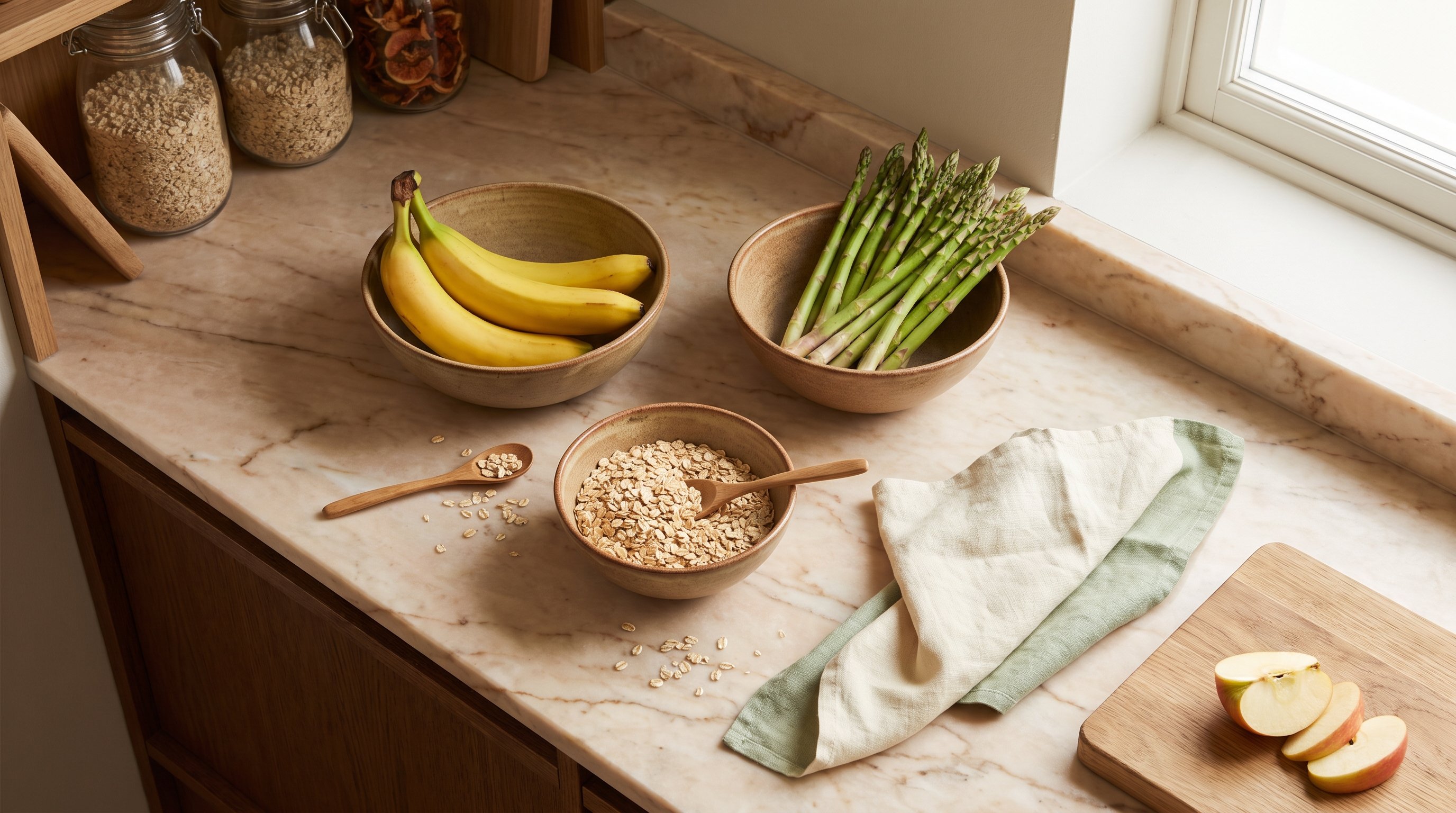
Here's the good news: the fibre in onions, oats, bananas and garlic doesn't just pass through you - it feeds the bacteria already living in your gut.
That's the whole mechanism. Certain fibres resist digestion in the small intestine, reach the colon intact, and become food for the microbes that live there.
This guide covers whether that actually does anything, how much fibre you'd realistically need, a simple comparison of eating this way versus other approaches, and what tends to stall progress along the way.
Do Prebiotic Foods Actually Work?
The mechanism is straightforward. Fibre types like inulin and resistant starch aren't broken down until they reach the colon, where resident bacteria ferment them.
That fermentation is the point - it's how the bacteria feed and multiply, and it's also what produces the gas some people notice when they increase fibre too quickly.
Here's the honest arithmetic: if you currently eat one portion of onion, garlic or oats a day and add two more plant-based portions, you've roughly tripled the fibre reaching your colon without changing anything else in your diet.
That's not a guess about outcomes - it's just counting portions. What that extra fibre does inside you varies person to person, which is why nobody can promise a specific result.
Why This Beats the Harder Alternative
The harder alternative is a strict elimination diet or a supplement-only routine that depends on remembering a capsule every day.
Food-based fibre doesn't ask you to remember anything separate - it's built into meals you're already eating, which is the entire adherence argument.
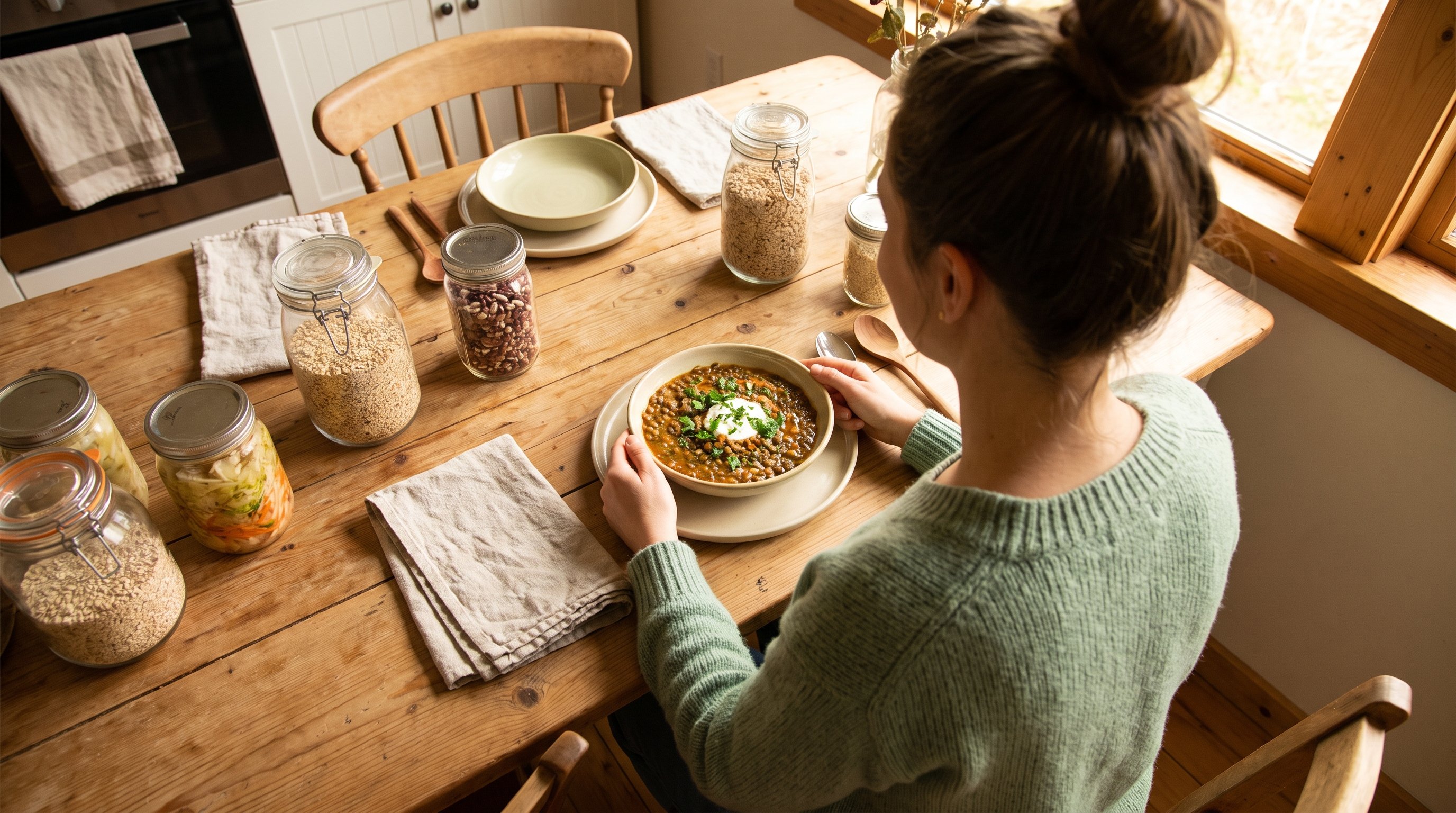
A rule you have to think about every day usually loses to a habit that happens automatically.
Swapping white rice for a portion with beans, or adding banana to breakfast, takes seconds and doesn't require willpower the way a strict plan does.
The Quantity Question: How Much, How Often?
There's no single magic number, but variety and consistency matter more than hitting an exact gram count.
Spreading a few different fibre sources across the day - oats at breakfast, lentils at lunch, garlic in dinner - tends to be easier to sustain than trying to eat one large portion once a day.
Find Your Own Number
Start by counting how many plant-based foods you already eat in a typical day, then add one or two more without removing anything.
If you're currently at two, aim for three or four. If digestion feels uncomfortable, pull back by one and hold there for a while before adding again.
| Food | Typical Serving | When To Add It |
|---|---|---|
Oats | 1 bowl | Breakfast |
Garlic or onion | 1-2 cloves | Lunch or dinner |
Banana | 1 medium | Snack |
Lentils or beans | Half cup | Lunch or dinner |
Leeks or asparagus | Half cup | Dinner |
The Practical Question: Fitting This Into Real Life
Knowing which foods help is one thing - building them into a week of actual meals without extra admin is the real challenge.
This is where a meal plan built around food you already like makes the difference, since it removes the guesswork of what to cook and when.
Probiotic Diet maps fibre-rich ingredients into recipes you choose, so adding another plant-based portion doesn't mean extra shopping trips or a separate meal plan to manage.
Keeping water, steps and meals logged in one place also makes it easier to notice what you're actually eating, rather than guessing at the end of the week.
Eating This Way vs Other Approaches
Most people weighing this up are choosing between food-first fibre, a supplement, strict elimination, or doing nothing differently at all.
Here's how those compare on the things that actually matter day to day.
| Approach | Daily Effort | Sustainability |
|---|---|---|
Food-first fibre | Low | High |
Fibre supplement | Low | Medium |
Strict elimination diet | High | Low |
Fermented foods only | Medium | Medium |
No change | None | None |
What Fibre Can't Promise You
No food targets one part of the body, and nothing here removes fat from any specific area - that's not how digestion or metabolism works.
There's no overnight shift either. Fermentation in the colon is a slow, ongoing process, not a switch that flips after one meal.
The honest answer is that fibre-rich food supports a process already running in your body - it doesn't cure anything, and it doesn't replace the basics of eating well and moving regularly.
Levers That Change the Result
A few things move the needle more than others when you're adding fibre to your week.
What Actually Moves the Needle
- Variety over volume - several different fibre sources feed a wider range of bacteria than one large portion of a single food
- Consistency across weeks - fibre eaten most days beats a big push followed by weeks of none
- Gradual increases - adding fibre slowly gives your digestion time to adjust instead of causing discomfort that makes you quit
How Long Until You See Results?
This is where most people quit - they expect to feel different within days and give up when nothing obvious happens.
Digestive changes tend to settle in gradually rather than announce themselves, so it's worth judging this by whether the habit has stuck, not by how you feel on day three.
Give it longer than you think you need to before deciding whether it's working for you.
Your First Four Weeks
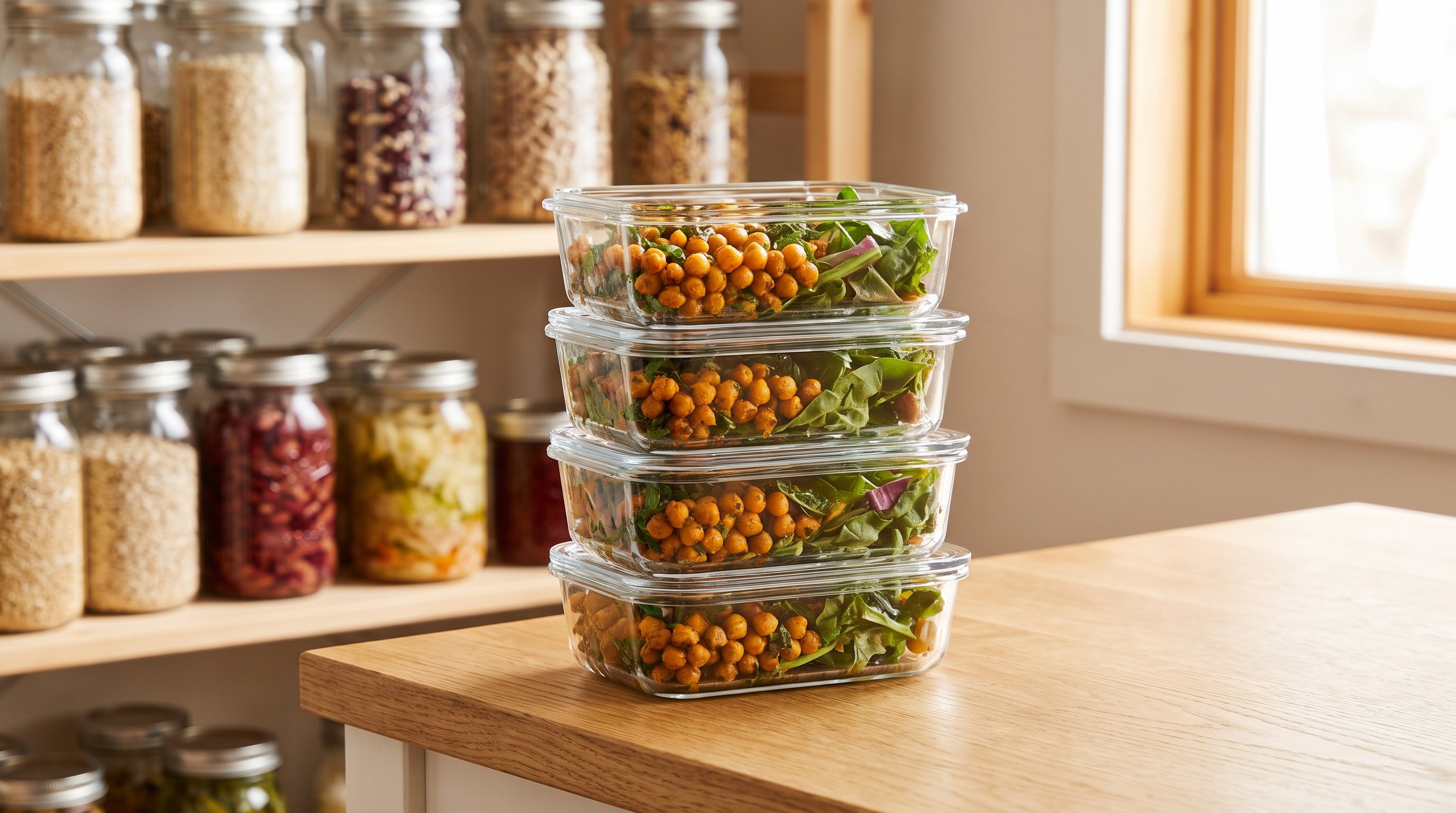
Order matters more here than exact numbers - build the habit before you worry about optimising it.
| Week | Focus |
|---|---|
Week 1 | Add one extra portion daily |
Week 2 | Spread fibre across two meals |
Week 3 | Add a third fibre source |
Week 4 | Notice patterns, adjust portions |
What Stalls Progress
Adding Too Much Too Fast
A sudden jump in fibre can cause bloating that puts people off entirely - increase portions gradually instead, over several weeks.
Relying on One Food
Eating only one fibre source feeds a narrower range of bacteria - rotate between a few different foods across the week.
Forgetting Water
Fibre needs fluid to move through the digestive system comfortably - keep water intake steady as you increase fibre.
Treating It As a Short-Term Fix
Stopping after a week or two means losing whatever momentum had built - treat it as an ongoing habit, not a trial.
No Structure Around Meals
Without a plan, fibre-rich food gets forgotten on busy days - a set meal structure makes it the default rather than an afterthought.
Why Probiotic Diet Works for This
Building a fibre habit is easier when the meals are already planned around it instead of left to memory.
Probiotic Diet pairs recipes with progress tracking, so you can see water, steps and meals in one place and notice what's actually working for you over time.
The challenges and light workouts built into the app give you something to stay consistent with, rather than relying on willpower alone.
Final Thoughts
Fibre-rich food isn't complicated - it's about adding variety gradually and giving it time to become routine, not about chasing a perfect number.
If you want help turning that into a plan that fits your week, Probiotic Diet builds it around meals you'd choose anyway.
Frequently Asked Questions
Do I Need a Supplement to Get Enough Fibre?
Not necessarily - food sources like oats, beans and onions provide the same fermentable fibre without an extra pill routine. Whole foods also bring other nutrients a supplement won't.
Will This Cause Bloating?
Adding fibre too quickly can cause temporary bloating for some people. Increasing portions gradually over a few weeks usually avoids this.
What If I Don't Like Vegetables?
Oats, bananas and beans all count and are easy to work into familiar meals without a big change in taste. Probiotic Diet's recipe options make it simple to find ones that actually suit what you enjoy eating.
Why Does Progress Seem to Stop After the First Few Weeks?
This usually means the habit has levelled off rather than stalled - digestion adjusts and then settles into a new normal. Reviewing portions and variety at this point, rather than giving up, tends to help.