Probiotic Foods: The Complete Guide
ByProbiotic Diet Editorial
Updated onOctober 1, 2026

Probiotic foods are fermented foods that carry live cultures - think yoghurt, kefir, sauerkraut, kimchi and miso. One serving a day is a reasonable starting point for most people, though there is no single magic number that applies to everyone.
The mechanism is simple: fermentation uses live microorganisms to break down sugars in food, and some of those microorganisms survive the trip through your gut. Once there, they join the existing community of bacteria that helps with digestion and general gut function.
This guide covers whether fermented foods actually do anything, how much you realistically need, what a first month looks like, and where most people stall out before they build a habit.
Do Probiotic Foods Work?
The mechanism behind fermented foods is straightforward. Fermentation introduces live bacterial cultures into food, and eating that food regularly keeps feeding your gut a steady supply of those same microorganisms.
Here's the honest arithmetic: one jar of sauerkraut or one pot of yoghurt is a single input into a system that works on consistency, not single events. Eating it once won't do much on its own, but eating it most days over weeks gives your gut a repeated, steady input to work with.
That's really the whole case for fermented foods. They're not a one-off fix, they're a repeatable habit, and the effect compounds the same way any dietary habit does - through repetition, not intensity.
Why This Beats the Harder Alternative
The harder alternative is treating gut health like a restriction project - cutting out entire food groups, following rigid protocols, or relying on something you have to remember to take every single day without fail.
Restriction fails for a predictable reason: it asks you to white-knuckle a change instead of folding it into what you already eat. Substitution works better because it doesn't ask you to give anything up - it asks you to add one small thing.

Swapping your usual side salad for a spoonful of kimchi, or your regular milk for kefir, costs you nothing in effort and nothing in enjoyment. That's the whole adherence argument - the habit that survives a busy week is the one that never felt like a sacrifice.
The Quantity Question: How Much, How Often
There's no single dose that works for everyone, and anyone promising an exact number for your body specifically is guessing. What matters more is frequency - a small serving most days beats a large serving once a week.
Find Your Own Number
Start with one serving a day of a fermented food you actually enjoy eating. If that feels easy after a week or two, add a second serving at a different meal rather than doubling up on the same one.
The table below gives you a few common fermented foods and a realistic starting serving size for each, so you can pick whichever fits your day.
| Food | Starting Serving | When To Eat It |
|---|---|---|
Plain yoghurt | 150-200g | Breakfast or snack |
Kefir | 150-250mL | Breakfast or evening |
Sauerkraut | 2-3 tbsp | Alongside a meal |
Kimchi | 2-3 tbsp | Alongside a meal |
Miso | 1 tbsp paste | Stirred into soup |
The Practical Question: Fitting It Into Real Life
Knowing the serving size is one thing. Remembering to actually buy, prep and eat the food on a normal weekday is the real challenge most people run into.
This is where a meal plan built around food you already like makes the difference - it puts the fermented ingredient directly into a recipe you were going to cook anyway, rather than leaving it as an extra task. Probiotic Diet does exactly this, folding fermented ingredients into recipes and tracking the habit alongside water, steps and weight so it stays visible instead of forgotten.
That combination - recipes plus a simple tracker - turns a one-off good intention into something you can actually see yourself keeping up.
Comparison: Food Sources vs Other Approaches
Most people weighing up gut health options are really choosing between getting probiotics from food, taking a supplement, or just ignoring the whole question.
Each path has a different cost in money, effort and flexibility, so it helps to see them side by side.
| Approach | Daily Effort | Cost | Flexibility |
|---|---|---|---|
Fermented foods | Low, folds into meals | Low to moderate | High |
Daily supplement | Low, but easy to forget | Ongoing cost | Moderate |
Strict elimination diet | High | Low | Low |
Doing nothing | None | None | N/A |
Guided meal plan | Low once set up | Subscription | High |
The Forbidden Promise, Answered Honestly
No fermented food targets a specific body area, and none of them work overnight. The body doesn't let you choose where weight comes off, and no yoghurt or kimchi changes that.
Fermented foods also don't cure anything and shouldn't be framed that way - they're a dietary habit, not a treatment. The honest answer is slower and less exciting: they support a healthy gut over time, as part of a wider pattern of eating that includes fibre, variety and consistency.
Levers That Change the Result
Not every lever matters equally. Here are the three that make the biggest difference, in order.
What Actually Moves the Needle
- Consistency over quantity - a small serving most days beats a large one occasionally, because the gut responds to repeated input, not single large doses.
- Variety of fermented foods - rotating between yoghurt, kefir, sauerkraut and miso exposes you to different bacterial strains rather than just one.
- Pairing with fibre - fermented foods tend to work better alongside fibre-rich vegetables and wholegrains, which give the bacteria something to feed on.
How Long Until You See Results?
This is where most people quit - they expect a quick, obvious change and give up when day five feels the same as day one.
Gut-related changes tend to happen gradually and quietly, not on a fixed schedule, so it's more useful to judge the habit by whether you're still doing it than by how you feel after a few days.
Treat the first few weeks as habit-building, not results-checking, and the pressure to see something immediately mostly disappears.
Your First Four Weeks
Here's a simple way to sequence the first month, where the order matters more than hitting exact numbers.
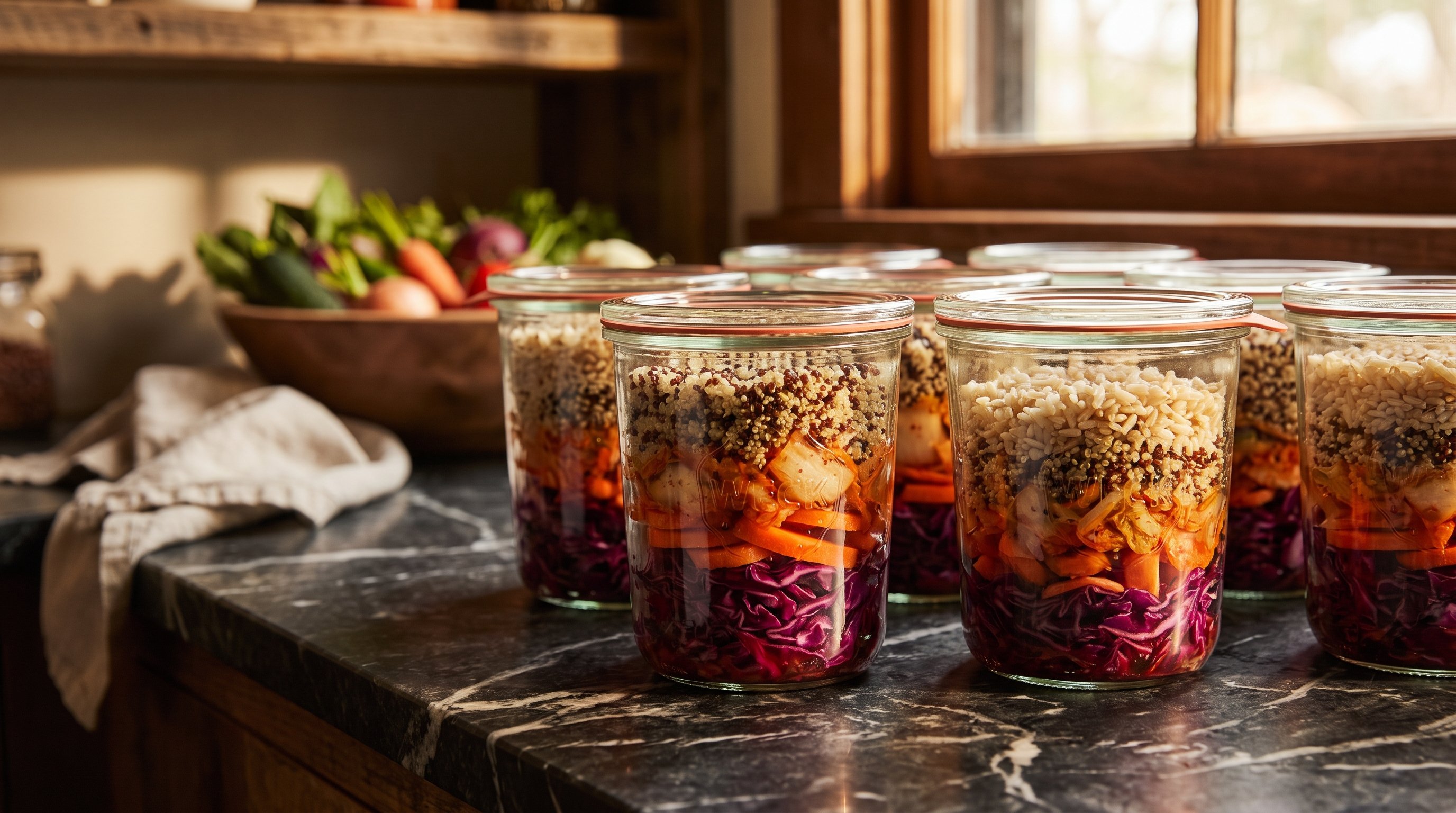
| Week | Focus | Example |
|---|---|---|
Week 1 | Add one serving daily | Yoghurt at breakfast |
Week 2 | Keep it consistent | Same food, same time |
Week 3 | Add a second food | Kimchi with dinner |
Week 4 | Pair with fibre | Add vegetables alongside |
What Stalls Progress
Buying It and Letting It Sit in the Fridge
A jar of sauerkraut does nothing unopened. Put it somewhere visible, like next to the plates, so it becomes part of the meal without extra thought.
Only Eating One Type of Fermented Food
Relying on just one food gets boring fast, and boredom is usually why people stop. Rotate between two or three options so the habit stays interesting.
Expecting a Dramatic Change in Days
Checking for results too soon sets you up to quit early. Shift the focus to whether you ate the food today, not how you feel today.
Treating It As Separate From the Rest of Your Diet
Fermented foods work better alongside fibre and variety, not in isolation. Pair them with vegetables, wholegrains and regular meals rather than adding them as an afterthought.
No Structure to Fall Back On
Without a plan, it's easy to forget the habit during a busy week. A written list of go-to meals that already include a fermented ingredient removes the need to decide from scratch each day.
Why Probiotic Diet Works for This
Building a fermented food habit is easiest when it's built into meals you were already planning to eat, rather than treated as an extra chore on top of everything else.
Probiotic Diet gives you a tailored plan with over 1000 recipes that work probiotic-friendly ingredients into everyday meals, plus trackers for water, steps and weight so the habit stays visible, and nutrition guides if you want to understand the why behind it.
Final Thoughts
Fermented foods are a small, repeatable habit, not a dramatic fix - the gains come from doing it most days, not from any single serving.
If building that routine on your own feels like one more thing to manage, Probiotic Diet turns it into a simple daily plan you can follow without overthinking it.
Frequently Asked Questions
Will Probiotic Foods Help Me Lose Weight?
They're not a weight-loss food on their own, and no fermented food melts fat from anywhere specific. They fit best as one part of a wider eating pattern, alongside fibre, variety and regular meals.
Can I Just Take a Supplement Instead of Eating the Food?
A supplement is one option, but it costs money on an ongoing basis and is easy to forget without a routine attached to it. Food-based sources fold into meals you're already eating, which tends to make them easier to stick with.
What If I Don't Like Fermented Foods?
Taste is genuinely the biggest barrier here, and it's worth trying a few different options since sauerkraut, kimchi, kefir and yoghurt all taste quite different. Starting with a smaller serving and building up gradually also makes the flavour easier to adjust to.
Why Do I Always Stop After a Couple of Weeks?
Most people drop off because the habit isn't attached to anything else in their routine, so it's easy to forget. Probiotic Diet addresses this by building fermented ingredients directly into recipes and tracking the habit, so it stays part of your day rather than a separate task to remember.